Have you ever come across something so unusual that you just had to stop and take a closer look?
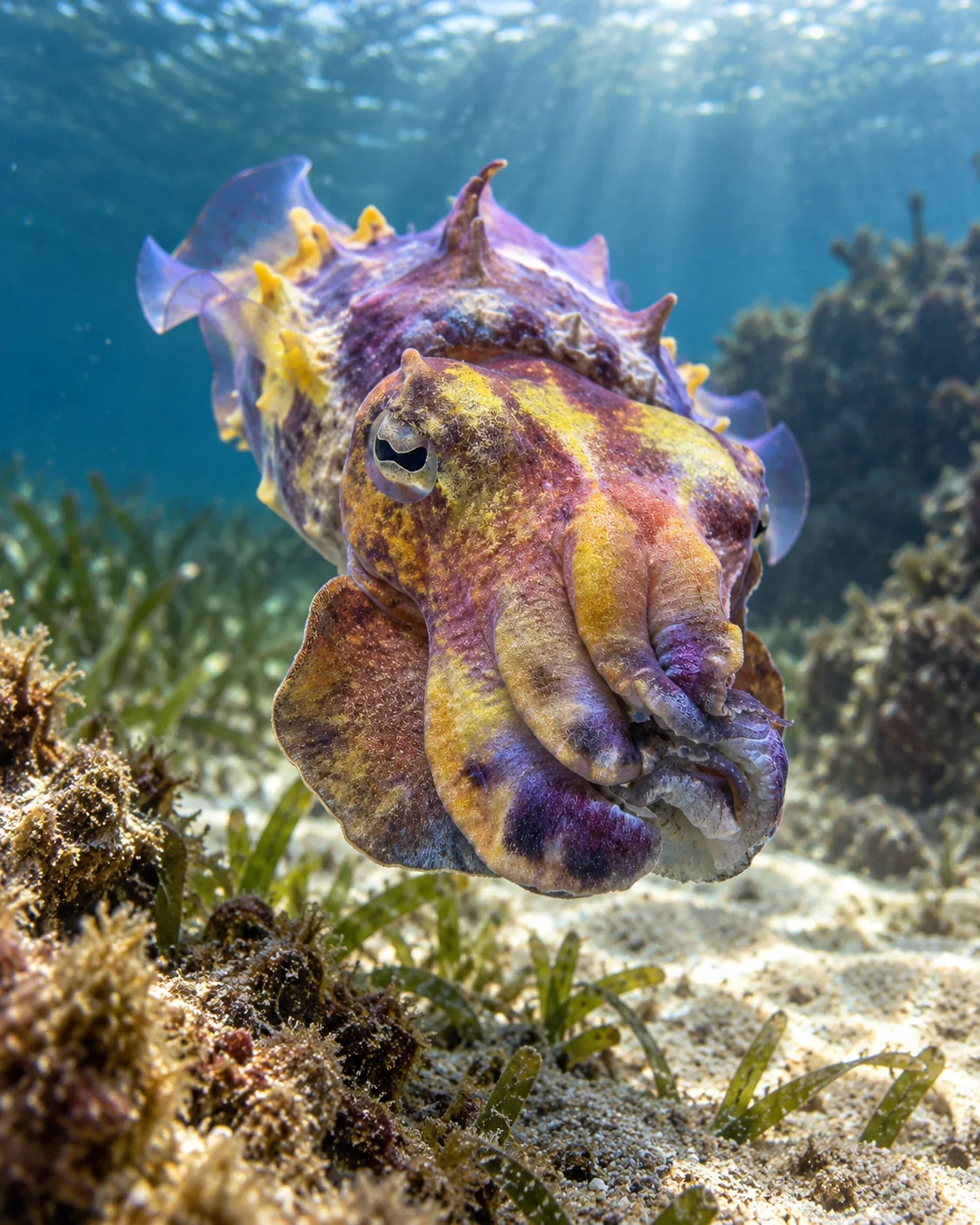
That’s exactly what happened when I encountered this fascinating little creature called a cuttlefish.
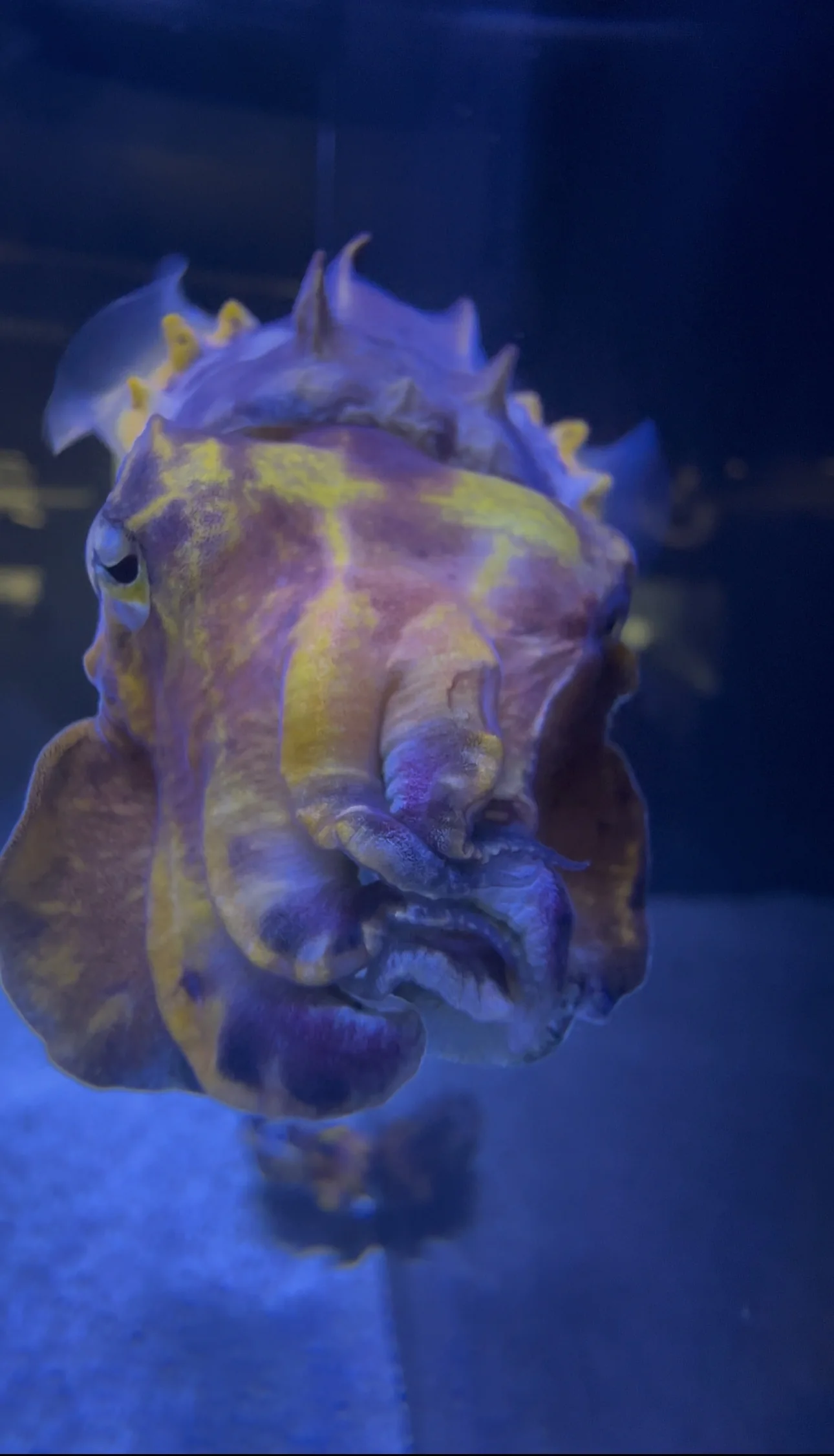
The first thing that caught my attention was its appearance. Those unusual eyes, the bright colors, and the way it seemed to glide effortlessly through the water. It looked like something from another world!
But what really fascinated me was how curious it seemed. As I watched it, I couldn’t help wondering if it was just as interested in me as I was in it.
I had never seen a living cuttlefish before, and I really didn’t know much about them.
So naturally, I wanted to learn more.
As it turns out, these strange little creatures have some pretty amazing abilities. They’re related to octopuses and squid, can change the appearance of their skin, and have some of the most unusual eyes in the animal kingdom.
And that’s just the beginning of what makes them so interesting.
Wait… It’s Not Actually a Fish?
One of the first things I discovered was that despite its name, a cuttlefish isn’t actually a fish!
It’s a cephalopod, which means it belongs to the same group of marine animals as octopuses, squid, and nautiluses.
That explains a few things about its unusual appearance.
Cuttlefish have eight arms and two additional tentacles used for catching prey. They also have a structure inside their bodies called a cuttlebone, which helps them control their buoyancy in the water.
Watching one move is fascinating. Rather than swimming like most fish, it can glide through the water using a rippling fin that runs along the sides of its body.
It’s almost like watching something float through the air.
A Living Color Show
Now here’s something that really surprised me.
Cuttlefish can change the colors and patterns of their skin incredibly quickly.
They have specialized pigment cells called chromatophores that help create these changes. Other structures in their skin contribute to their remarkable appearance.
They use these abilities for camouflage, communication, and interactions with other cuttlefish.
Think about that for a moment.
A creature that can change its appearance to blend into its surroundings or communicate with others!
And some species can even change the texture of their skin to help disguise themselves.
It’s an amazing example of just how creative nature can be.
Those Eyes!
I couldn’t write about the cuttlefish without mentioning its eyes.
They were one of the first things I noticed.
Unlike our round pupils, cuttlefish have pupils that can take on a distinctive W shape.
But here’s the really interesting part.
Research suggests that cuttlefish have limited color vision, and many studies indicate they are colorblind in the conventional sense.
So how does an animal that creates such incredible displays of color manage to do it?
Scientists have been studying that question for years. Their skin-pattern changes involve remarkable visual processing and nervous-system control.
The more I read about these creatures, the more questions I seemed to have!
Smarter Than They Look?
I also discovered that cuttlefish are surprisingly capable learners.
Researchers have demonstrated that they can remember information, learn from experience, and make decisions based on changing circumstances.
In one experiment, cuttlefish even demonstrated the ability to wait for a preferred food reward rather than immediately eating a less desirable option.
That’s pretty remarkable for an animal that looks so different from us.
Of course, I can’t say what the cuttlefish I encountered was thinking.
But I can tell you that watching it glide around with those unusual eyes certainly made me wonder.
And sometimes, wondering is where the best discoveries begin.
There’s Always Something More to Discover
What started as a few moments watching an unusual little animal turned into an opportunity to learn about an entirely different kind of life.
I didn’t set out to study cuttlefish. I wasn’t looking for a science lesson.
Something simply caught my attention.
And instead of walking past, I stopped and looked a little closer.
That’s one of the things I enjoy most about discovering the world around us. You never really know what might spark your curiosity.
Sometimes all it takes is a strange little creature with colorful skin and curious-looking eyes.
And suddenly, there’s a whole new world to explore.
Join the Discovery
Now I’m curious about your experiences!
Have you ever seen a cuttlefish? Maybe you’ve encountered another unusual animal that made you stop and wonder.
What caught your attention? What questions did it leave you with?
I’d love to hear about it.
Share your experience, ask a question, or tell us about something fascinating you’ve discovered.
You don’t need to be an expert. You just need to be curious.
After all, that’s what Discover the Journey is all about.
Share your discovery →Behind the Discovery
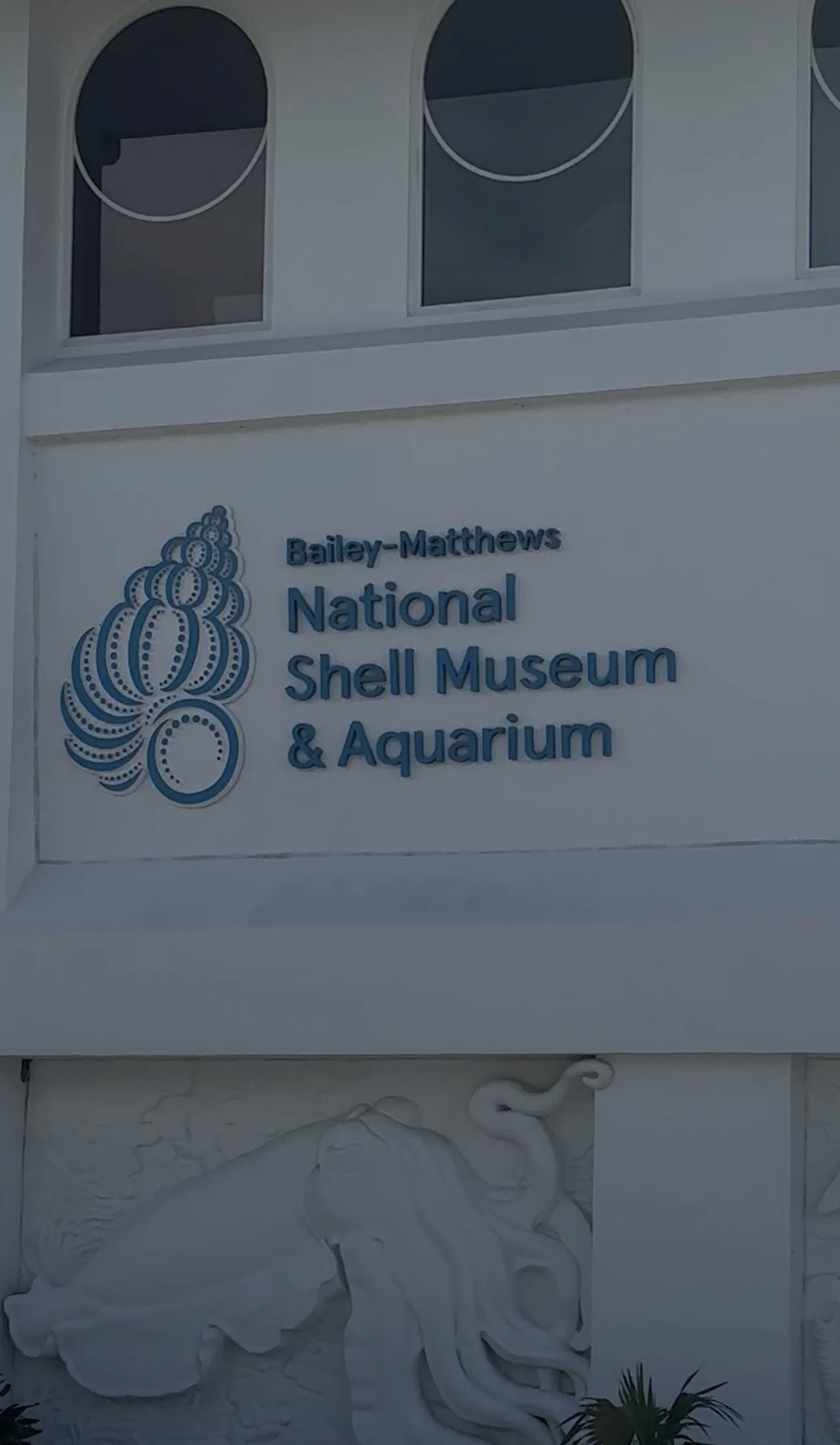
This cuttlefish was photographed and filmed during a September 2026 visit with my wife, Lisa, to the Bailey-Matthews National Shell Museum & Aquarium on Sanibel Island, Florida.
The museum offers visitors an opportunity to explore the fascinating world of mollusks and other marine life.
The photographs accompanying this article, including a still from my video, are from my own encounter.
If you’re interested in visiting or learning more about the museum, you can explore its website at shellmuseum.org.
What did you discover today?
Discover the Journey.
Original photography and video still: Billy · September 2026 · Sanibel Island.