Sometimes the most remarkable discoveries happen when we aren’t looking for them.
Growing up in New Jersey, I was fascinated by the little creatures I discovered outdoors. Salamanders were among my favorites. Finding one under a log or tucked away in a damp corner of the woods was always exciting.
When I moved to Florida, I discovered an entirely different world of little reptiles.
Lizards were everywhere!
They darted across sidewalks, climbed fences, and disappeared into the bushes before I could get a good look at them. These tiny creatures fascinated me. They were so different from the salamanders I remembered from childhood.
But during a trip to Sanibel Island with Lisa, I encountered something that took my fascination to an entirely new level.
We were driving along the road when something caught my attention out of the corner of my eye.
Wait a minute. Was that an iguana?
“Lisa, turn around! I want to see that again!”
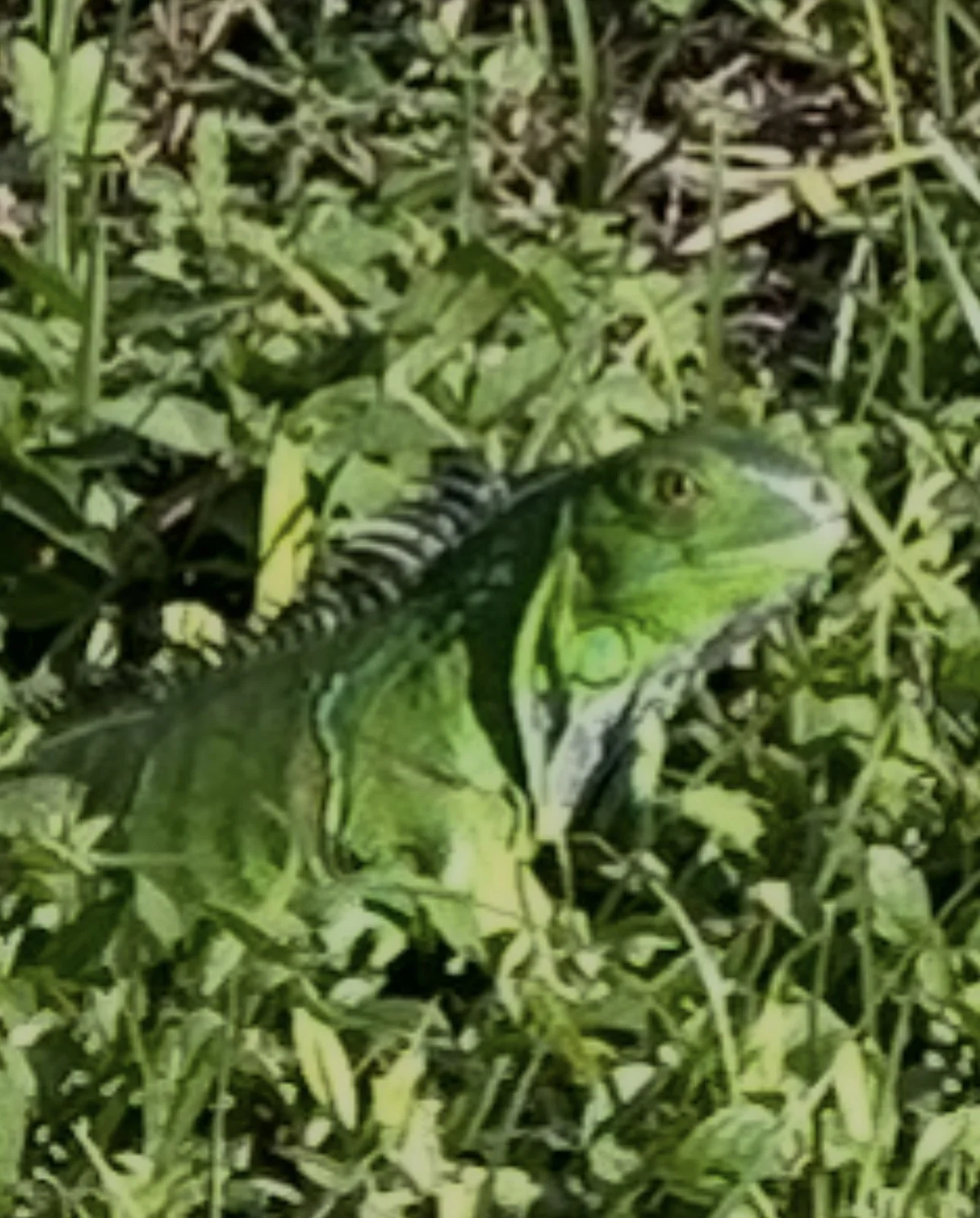
There, sitting in the grassy median of the roadway, was an iguana!
I couldn’t believe it.
I had seen iguanas in pet shops and zoos, but never living freely in the wild. I hadn’t even realized they were on Sanibel Island.
Then I remembered that iguanas had established themselves in South Florida.
Still, knowing something exists and actually encountering it are two completely different experiences.
Suddenly, an ordinary drive had turned into a discovery!
A Dragon in the Trees
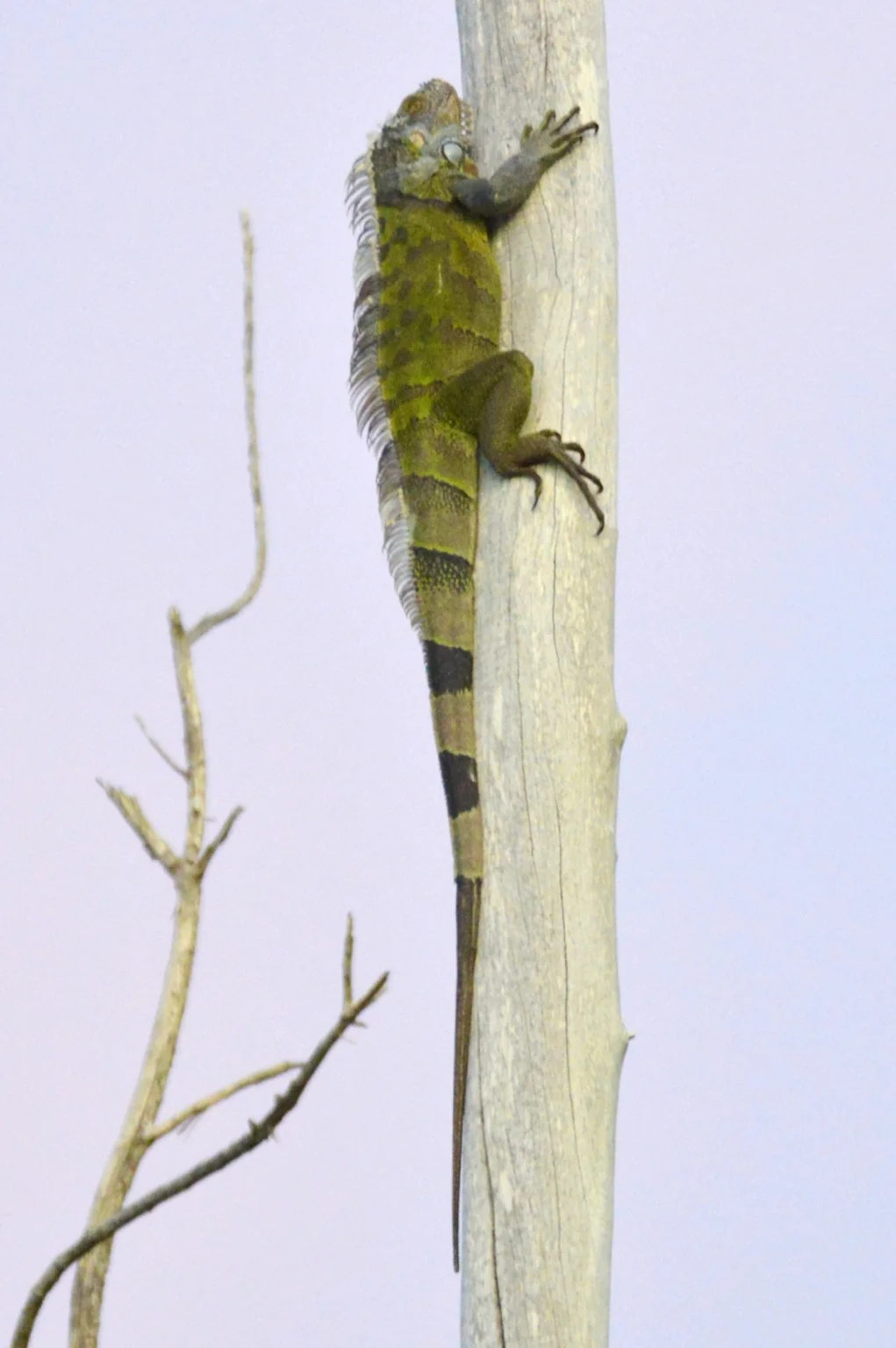
Later, while hiking through Pond Apple Park with our tour guide, I encountered another iguana.
This time, I wasn’t surprised to see one.
What amazed me was its size!
There was this enormous reptile clinging to the side of a tree. Its long tail, powerful-looking claws, and the row of pointed spines running down its back gave it an almost prehistoric appearance.
It looked like a little dragon!
I started wondering just how big these creatures could grow.
As it turns out, adult male green iguanas can exceed five feet in total length, with much of that length coming from their tails.
Five feet!
Think about that for a moment. An animal longer than many children are tall, climbing around in the trees of South Florida!
And those long toes and sharp claws help explain how such a large reptile can grip branches and climb.
Watching that iguana made me realize just how little I knew about these fascinating creatures.
Wait… They Have a Third Eye?
As I began learning more about iguanas, I discovered something that really caught my attention.
They have a third eye!
Well, not exactly an eye like the two we’re familiar with.
On top of an iguana’s head is a small light-sensitive structure called a parietal eye.
It doesn’t produce detailed images like a normal eye, but it can detect changes in light.
Imagine that!
An animal already equipped with excellent vision has another sensory structure built into the top of its head.
Scientists study how this structure contributes to sensing light and regulating biological rhythms.
I began looking at iguanas a little differently after learning that.
There was far more going on beneath those scales than I ever imagined.
The Mystery of Florida’s Falling Iguanas
Then I came across something that sounded almost unbelievable.
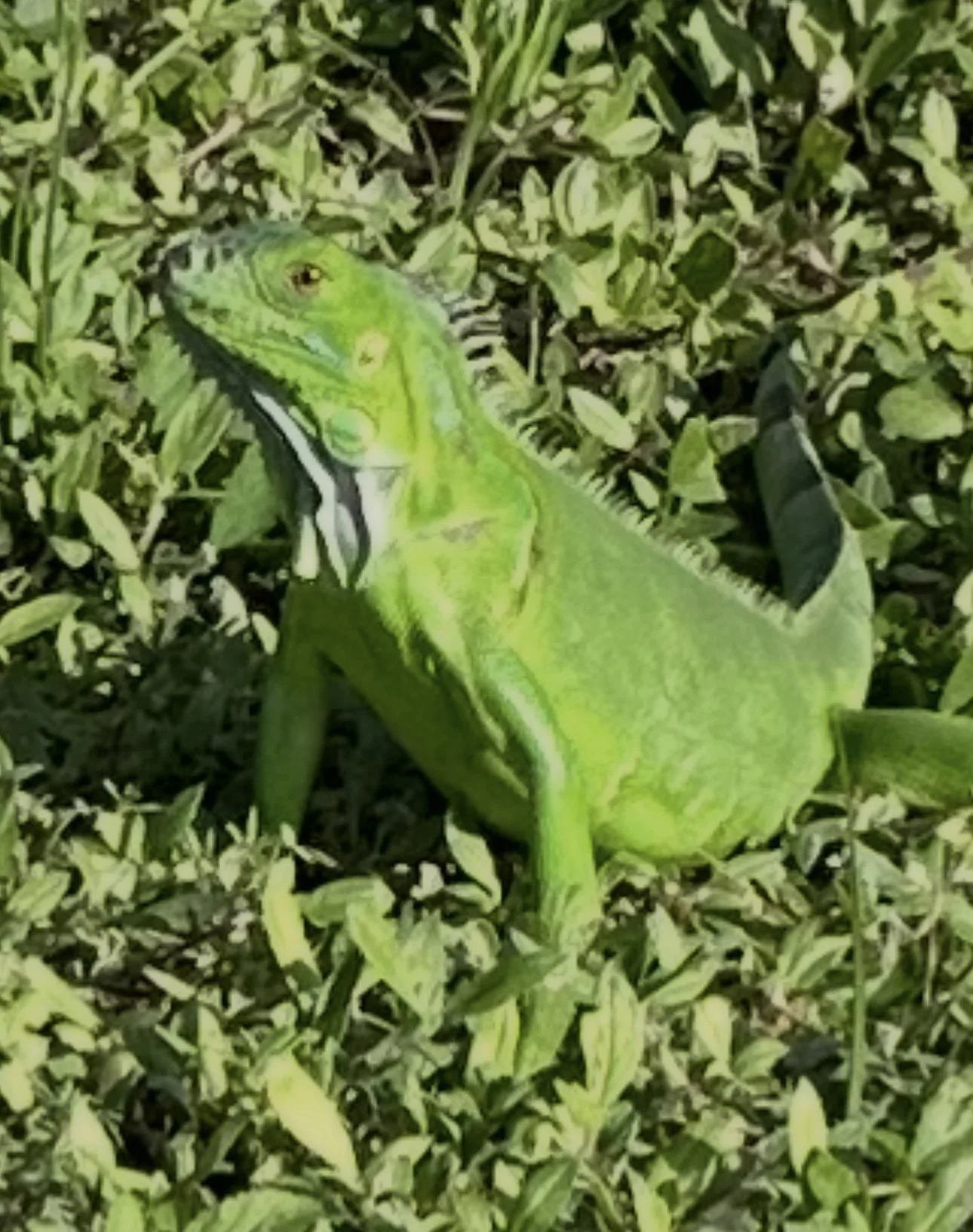
Sometimes, iguanas fall out of trees!
Not because they’re clumsy.
Because they’re cold.
Iguanas depend on outside temperatures to regulate their body heat. When South Florida experiences an unusually cold spell, these reptiles can become so sluggish and immobilized that they lose their grip on branches.
And down they go!
The really surprising part is that some of these fallen iguanas aren’t dead. They’re temporarily cold-stunned and may recover when the temperatures rise.
Imagine walking outside on a chilly Florida morning and discovering an enormous iguana lying beneath a tree!
It’s certainly not something I ever encountered growing up in New Jersey.
Of course, a motionless iguana shouldn’t be handled. Even a cold-stunned animal can recover and defend itself with sharp claws, teeth, or its powerful tail.
Beautiful Visitors with a Complicated Story
The more I learned, the more I realized there was another side to this discovery.
Green iguanas are not native to Florida.
They became established here largely through the exotic pet trade, and their populations have spread in parts of South Florida.
Although they’re fascinating to observe, they can also cause problems. Their feeding can damage vegetation, and their burrowing can harm landscaping and infrastructure.
It’s an interesting contradiction.
Here was an animal I found absolutely incredible, yet its presence in Florida also presents challenges for the environment.
I think that’s part of discovering the natural world, too.
Sometimes the things we admire have stories that are more complicated than we first imagine.
Join the Discovery
Have you ever encountered an animal in the wild that you had only seen in a zoo, aquarium, or pet shop?
What was your reaction?
Did you stop to watch it? Take a photograph? Or discover something about it that completely surprised you?
I’d love to hear your story.
After all, sometimes the most memorable discoveries happen when we least expect them.
Behind the Discovery
This story began with a childhood fascination for salamanders in New Jersey and continued years later when I moved to Florida.
I never imagined that one day I’d be asking Lisa to turn around so I could photograph wild iguanas sitting beside the road on Sanibel Island.
And that enormous iguana climbing the tree at Pond Apple Park?
That’s an image I won’t soon forget.
What started as a quick glimpse out of a car window became another reminder of why I love exploring.
There’s so much happening in the world around us, even in the places we think we already know.
Sometimes all it takes is noticing something out of the corner of your eye.
What did you discover today?
Discover the Journey.
Photographs and illustrative imagery supplied or approved for this Discovery Article.