My fascination with knives began when I was just a child.
I remember my grandfather giving me a pocket knife. To some people, it might have seemed like an ordinary little tool.
But to me, it was something extraordinary!
I was fascinated by the blade, the handle, the way it opened and closed, and how something so small could be so useful.
That fascination stayed with me as I grew older.
Eventually, I became interested in making knives myself. And as I began working with metal, a new curiosity developed.
Where did steel actually come from?
Who discovered it?
How did ancient people figure out how to transform something found in the earth into a material strong enough to make knives, swords, and tools?
Those questions sent me searching through books and, eventually, the early days of the World Wide Web.
What I discovered was an extraordinary journey through history.
And perhaps the most fascinating part?
Nobody really knows who made the very first piece of steel!
Before Steel, There Was Stone
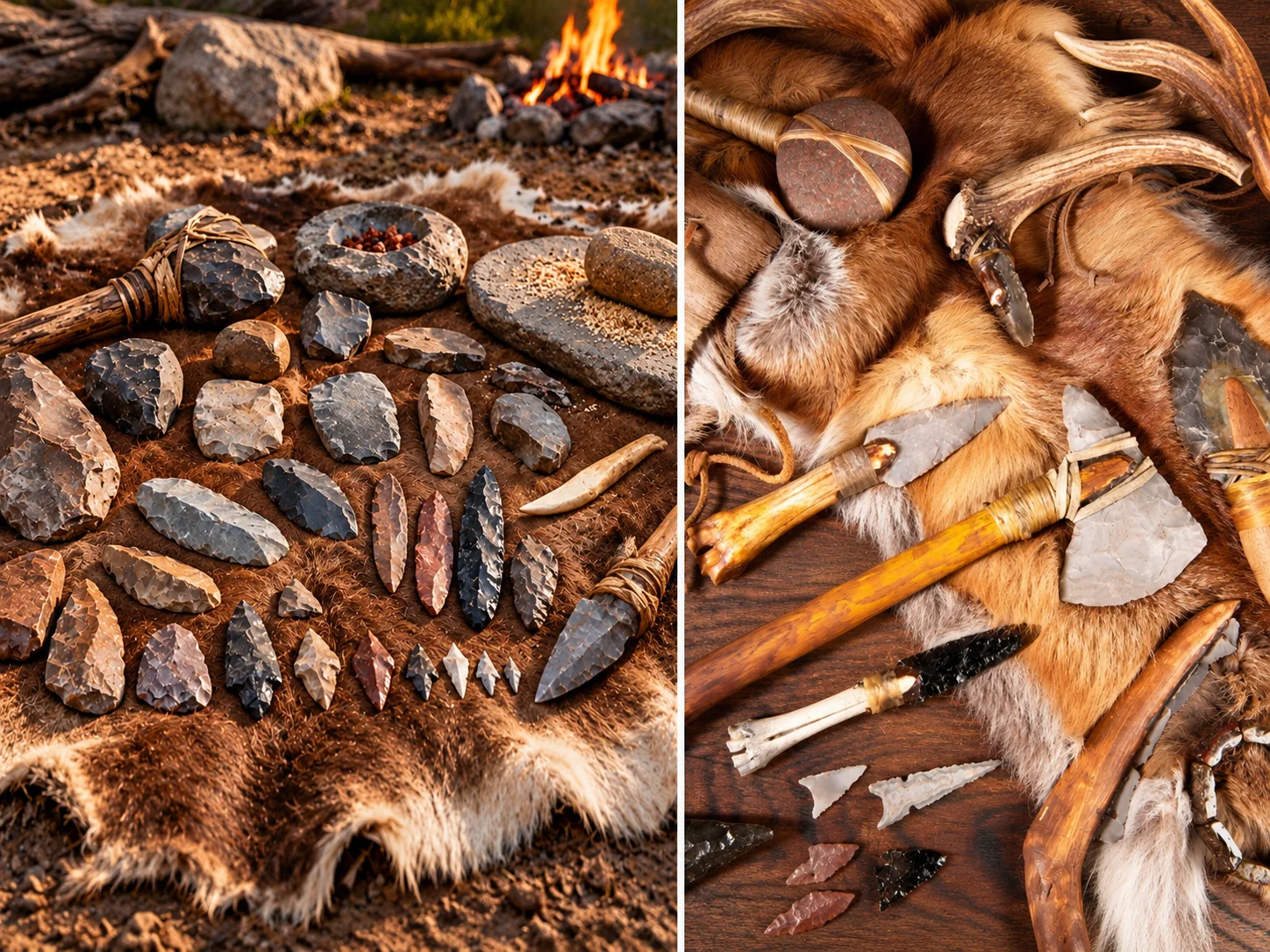
Long before people worked with metal, they made tools from stone, bone, wood, and antler.
A carefully fractured piece of flint could become a sharp cutting blade. A stone point attached to a wooden shaft could become a spear.
Eventually, people learned to work with copper and later bronze, an alloy commonly made from copper and tin.
But another material was waiting to transform civilization.
Iron.
And the story of iron begins somewhere rather unexpected.
Iron from Outer Space!
Here’s something I found absolutely fascinating.
Some of the earliest iron used by humans didn’t come from mines.
It came from outer space!
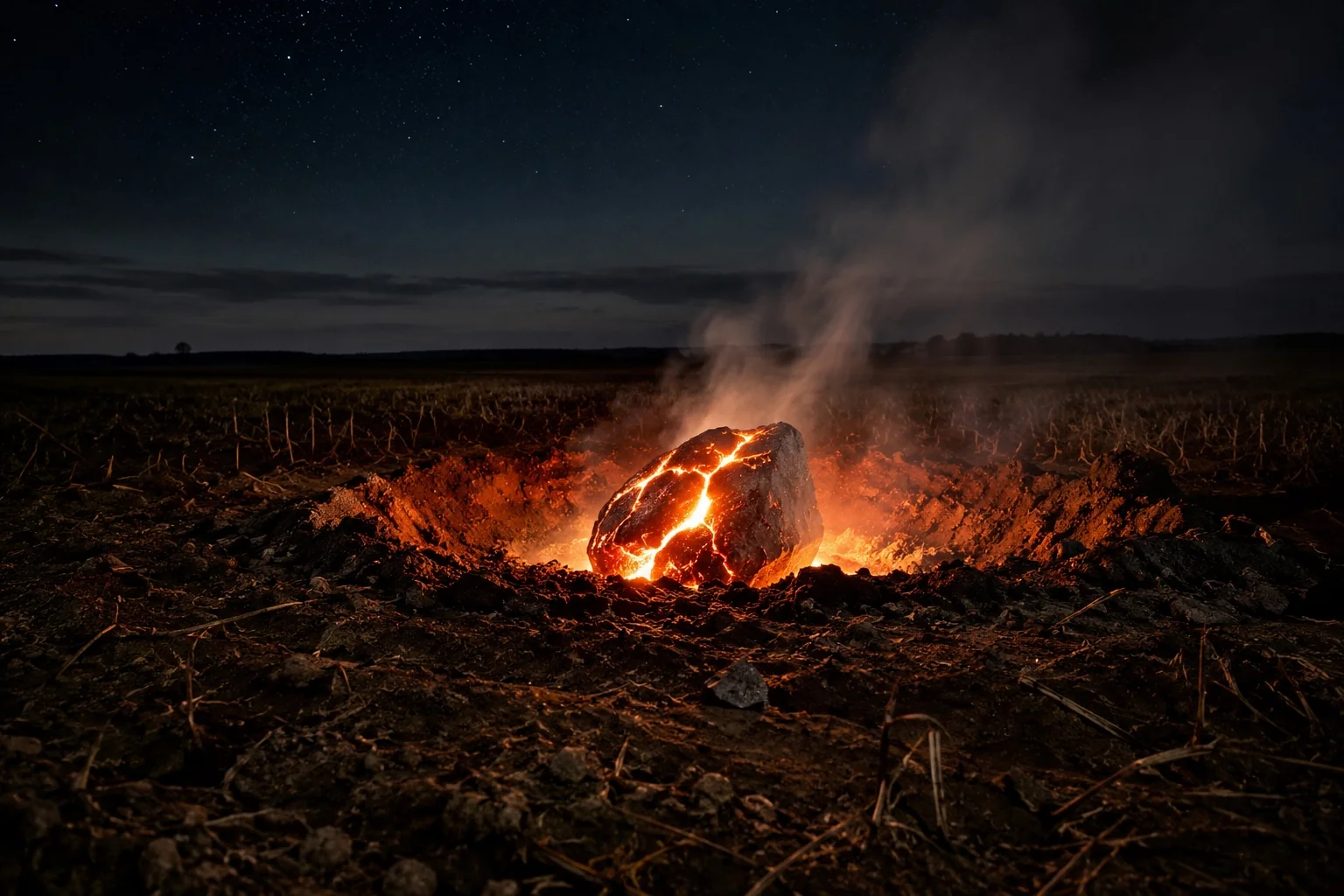
Certain meteorites contain metallic iron, and ancient people learned to hammer that material into useful objects.
One remarkable example is the iron dagger buried with the Egyptian pharaoh Tutankhamun.
Scientists examining the blade discovered that its nickel and cobalt content was consistent with iron from a meteorite.
Imagine that!
An ancient Egyptian dagger made from material that fell from the sky!
But meteorites were rare. If humans wanted iron in larger quantities, they needed to discover how to extract it from something far more common.
Rocks.
The Secret Hidden Inside a Rock
Iron is abundant in Earth’s crust, but most of it exists within minerals such as hematite and magnetite.
Looking at a piece of iron ore, you’d never imagine it could eventually become a beautiful, polished pocket knife.
So how did ancient people make that discovery?
We don’t know exactly.
But thousands of years ago, metalworkers learned that heating iron-rich ore with charcoal could release the iron from its chemical bonds.
Early furnaces, called bloomeries, produced a hot, spongy mass of iron mixed with impurities.
Metalworkers repeatedly heated and hammered this material to remove some of those impurities and consolidate the metal.
Think about the patience that required!
No modern machinery. No temperature gauges. No understanding of atoms or chemistry.
Just fire, charcoal, rocks, and generations of experimentation.
And eventually, something remarkable happened.
The Accidental Birth of Steel
Iron and steel aren’t exactly the same thing.
Steel is primarily iron combined with a relatively small amount of carbon.
And that tiny difference can dramatically change the material!
Relatively pure iron is soft and easy to shape. With the right carbon content and treatment, steel can become much harder and better suited for a cutting edge.
Now imagine an ancient blacksmith heating iron in a charcoal fire.
One day, he notices that a particular blade seems harder than the others.
It holds its edge better.
Why?
Without realizing it, carbon from the charcoal-rich environment may have entered the iron.
This process, called carburization, can transform iron into steel.
Of course, we don’t know exactly how the first steel was discovered. Different civilizations developed steelmaking methods over many centuries.
There probably wasn’t one inventor who suddenly announced he’d created steel.
Instead, generations of craftspeople experimented, observed, and gradually learned to control this remarkable material.
Where Did Steel Begin?
This was one of the biggest questions I wanted answered.
Was steel first made in Egypt? India? China?
The answer isn’t entirely clear.
Archaeologists have discovered extremely early iron and steel artifacts in Anatolia, part of modern-day Turkey.
Some date back to the Bronze Age, although researchers still debate whether their steel-like characteristics were produced intentionally.
By around 1100 BCE, evidence from Cyprus indicates that metalworkers were producing steel knives hardened by rapid cooling.
That caught my attention!
Imagine discovering that heating and cooling a blade in a particular way could dramatically change its cutting ability.
Ancient metalworkers eventually learned another important lesson.
A very hard blade could also be brittle.
Through processes such as quenching and tempering, craftspeople developed ways to balance hardness with toughness.
These principles are still important to knife makers today.
And remarkably, many of these discoveries were made long before anyone understood what was happening inside the metal.
The Legendary Steel of India
As steelmaking spread and evolved, some cultures developed extraordinary techniques.
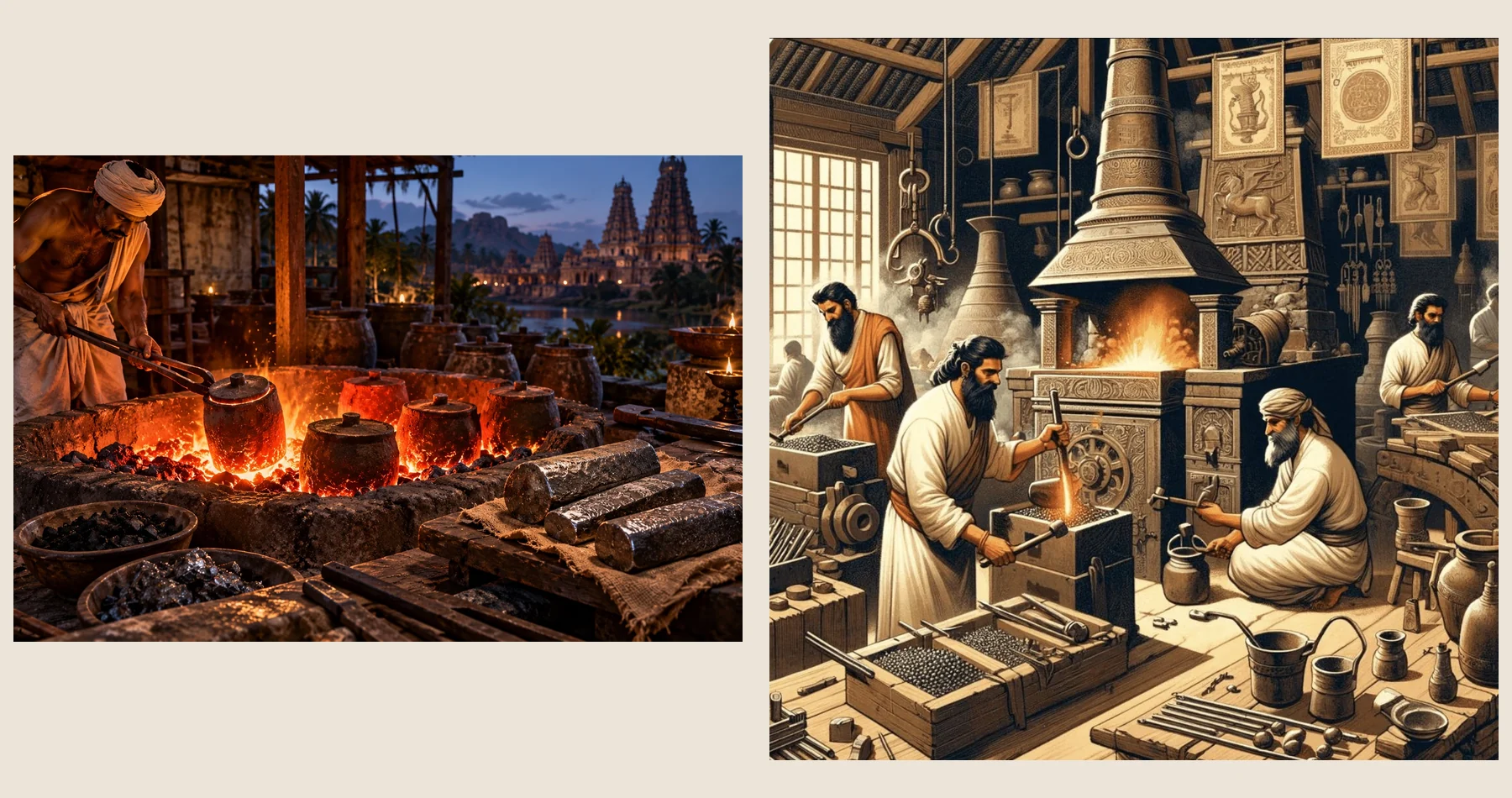
One of the most fascinating was the production of wootz steel in India.
Metalworkers used special crucibles to produce high-carbon steel ingots that became highly prized.
This steel became associated with the legendary patterned Damascus blades.
You’ve probably seen photographs of Damascus-style steel.
Those beautiful flowing patterns almost resemble wood grain or ripples in water!
Some historical Damascus blades developed their patterns through structures within crucible steel, while many modern Damascus-style blades are made by pattern-welding different steels together.
Different methods, but both fascinating examples of craftsmanship.
In Japan, traditional swordsmiths also developed sophisticated techniques for forging and heat-treating steel.
Across the world, craftspeople were searching for ways to create stronger, sharper, and more dependable blades.
And much of that knowledge was passed from one generation of makers to another.
The Revolution That Changed the World
For thousands of years, producing quality steel was difficult, expensive, and time-consuming.
Then came the Industrial Revolution.
In 1856, English inventor Henry Bessemer introduced a process that helped change steel production forever.
His method involved blowing air through molten iron, allowing oxygen to react with carbon and other elements.
Once refined and improved, this technique made it possible to produce large quantities of steel much more quickly and economically.
And suddenly, steel wasn’t just a material for knives, swords, and tools.
It became essential to railroads, bridges, ships, machinery, and eventually skyscrapers.
The modern world was being built with steel!
Today, steelmaking has become an incredibly sophisticated science.
Manufacturers carefully control carbon and other elements to produce steels for different purposes.
Some resist corrosion. Others are designed for incredible strength, durability, or cutting performance.
And steel can be recycled again and again, allowing old metal to become something entirely new.
Looking at a Pocket Knife Differently
After discovering all this history, I began looking at knives a little differently.
That pocket knife my grandfather gave me as a child was connected to something much bigger than I ever imagined.
It represented thousands of years of curiosity and experimentation.
Ancient people working with stone.
Metalworkers discovering iron.
Blacksmiths experimenting with charcoal and fire.
Craftspeople developing extraordinary blades.
And inventors finding new ways to produce the steel that helped build our modern world.
All those discoveries contributed to the familiar tools we hold in our hands today.
Now, whenever I pick up a piece of steel in my workshop, I can’t help appreciating the incredible journey that brought it there.
And to think, my curiosity began with a little pocket knife from my grandfather!
Join the Discovery
Have you ever wondered where the materials in your everyday possessions came from?
Maybe it’s the steel in a pocket knife, the glass in a window, or the copper wiring in your home.
Have you ever taken something apart or tried making something yourself simply because you wanted to understand how it worked?
Or did someone give you an object as a child that sparked a lifelong fascination?
I’d love to hear your story.
Sometimes the smallest objects lead us to the biggest discoveries.
Behind the Discovery
My interest in steel has always been closely connected to my fascination with knives.
It began with a pocket knife my grandfather gave me when I was a child.
Years later, as I became involved in knife making, I wanted to understand the material I was working with.
I began reading books and searching the early World Wide Web for information about metallurgy, blacksmithing, and the history of steel.
What started as an interest in a simple cutting tool became an appreciation for thousands of years of human discovery.
Even today, when I’m working with steel, I find myself thinking about the generations of craftsmen who came before me.
They experimented, made mistakes, learned, and passed their knowledge along.
And in workshops around the world, that same curiosity continues.
Including mine.
What did you discover today?
Discover the Journey.
Photographs and illustrative imagery supplied or approved for this Discovery Article.