Come on! Trees growing in saltwater? How is that even possible?
I’ve lived in Florida for years, and I’ve seen mangroves countless times.
They’re everywhere along our beautiful coastlines. Their branches stretch over the water, and their strange roots form tangled structures along the shoreline.
But here’s something interesting.
For years, I never really questioned what I was looking at.
Growing up in New Jersey, I was familiar with forests, freshwater lakes, streams, and all the plants that surrounded them.
Mangroves were something I’d seen in movies and on television. They belonged to those exotic tropical places that seemed so different from the world I knew.
When I eventually moved to Florida, they simply became part of the scenery.
Until one day, while exploring an island with Captain Gerry, I began paying closer attention.
And that’s when things started getting interesting!
Something from Another Planet
As Gerry and I explored the island, I noticed something unusual about the muddy ground around the mangroves.
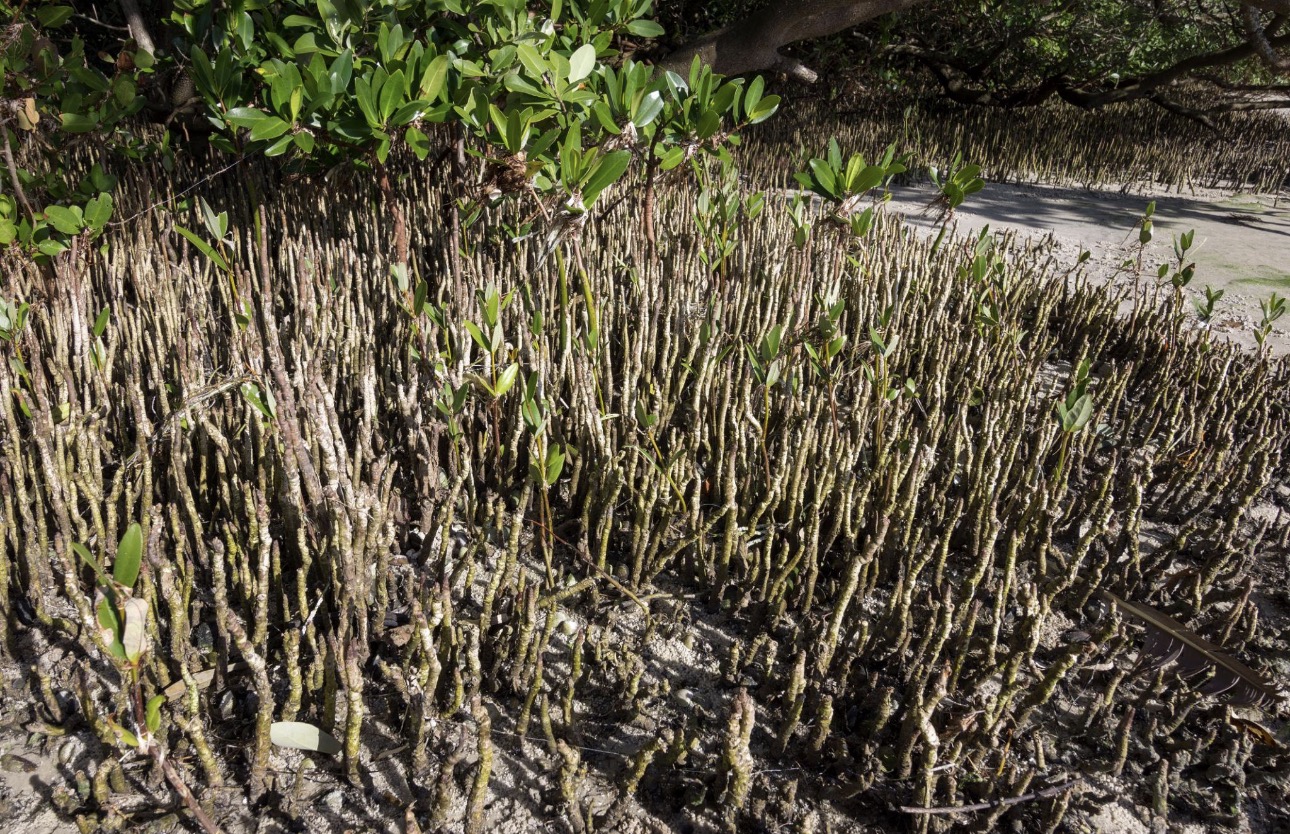
There were little spikes sticking up everywhere!
They reminded me of stalagmites rising from the floor of a cave.
The entire area looked almost extraterrestrial.
I’d seen these strange formations before, but I never understood what they were.
Finally, I asked Gerry.
“Are those baby trees?”
His explanation completely surprised me.
He called them breathing tubes.
“NO WAY!”
I couldn’t believe it!
He explained that these strange projections were connected to the mangroves’ roots.
Roots that help the trees breathe?
Now that was something I had never encountered growing up in New Jersey!
Wait… Trees Need Breathing Tubes?
Later, I decided to investigate what Gerry had shown me.
And here’s what I discovered.
Those strange structures are called pneumatophores (noo-MAT-uh-forz).
They’re specialized roots found around certain mangroves, particularly black mangroves.
Unlike the roots we’re accustomed to seeing, these grow upward from underground root systems.
But why?
It turns out that the muddy soil surrounding mangroves presents a serious problem.
It’s frequently saturated with water, leaving very little oxygen available underground.
And although trees absorb carbon dioxide through their leaves, their living root tissues also need oxygen for respiration.
The pneumatophores provide a pathway for air to reach those submerged roots, particularly when the tide is low and the projections are exposed.
Suddenly, those strange little structures made sense!
They weren’t baby trees.
They were part of an extraordinary adaptation that allows mangroves to survive in an environment where many other trees would struggle.
And that discovery raised another question.
If the roots have to overcome such difficult conditions, what about all that salt?
How Do You Drink Saltwater?
Think about what happens when most plants are exposed to excessive salt.
They struggle to absorb water, and too much salt can damage their tissues.
Yet mangroves grow along coastlines where saltwater is part of everyday life.
How?
As I researched the subject, I discovered that different mangroves have developed different solutions.
Red mangroves can exclude most of the salt from seawater through specialized processes at their roots.
Black mangroves use another remarkable strategy.
They have glands in their leaves that release excess salt.
Sometimes you can actually see salt crystals forming on the leaf surfaces!
Imagine that.
A tree that can release salt through its leaves!
And then I learned something that surprised me even more.
Mangroves don’t necessarily need saltwater to survive.
Many can grow in freshwater, too.
Their special adaptations simply allow them to flourish in salty coastal environments where other plants have difficulty competing.
What I’d always thought of as ordinary shoreline vegetation was becoming more extraordinary with every question.
There’s a Whole World in That Mud!
While exploring the island, I’d also noticed something moving around those strange roots.
Crabs!
Little crabs, perhaps the size of a nickel or a quarter.
They were incredibly quick.
Whenever I approached, they’d dart across the exposed mud and disappear into tiny holes.
I’d see them especially in areas where the water had receded but the ground was still muddy.
I began wondering about those little creatures, too.
During my research, I learned that fiddler crabs and other burrowing crabs are common inhabitants of mangrove mudflats.
They use burrows for shelter, and some feed on tiny organisms and organic material in the sediment.
Their activities can also influence the structure of the mud.
I can’t say for certain which species Gerry and I were watching, but their behavior certainly reminded me of the fiddler crabs I was learning about.
And those little crabs were only part of the story.
Mangrove forests provide habitats for shrimp, shellfish, birds, and many kinds of fish.
The tangled roots offer sheltered places where young fish can feed and hide from predators.
An entire community of living things depends on these unusual coastal forests.
What first looked like a strange patch of muddy ground was actually part of a remarkably complex ecosystem.
A Tree That Sends Its Young on a Journey
Here’s another discovery I hadn’t expected.
Some mangroves begin growing their young before they even leave the parent tree!
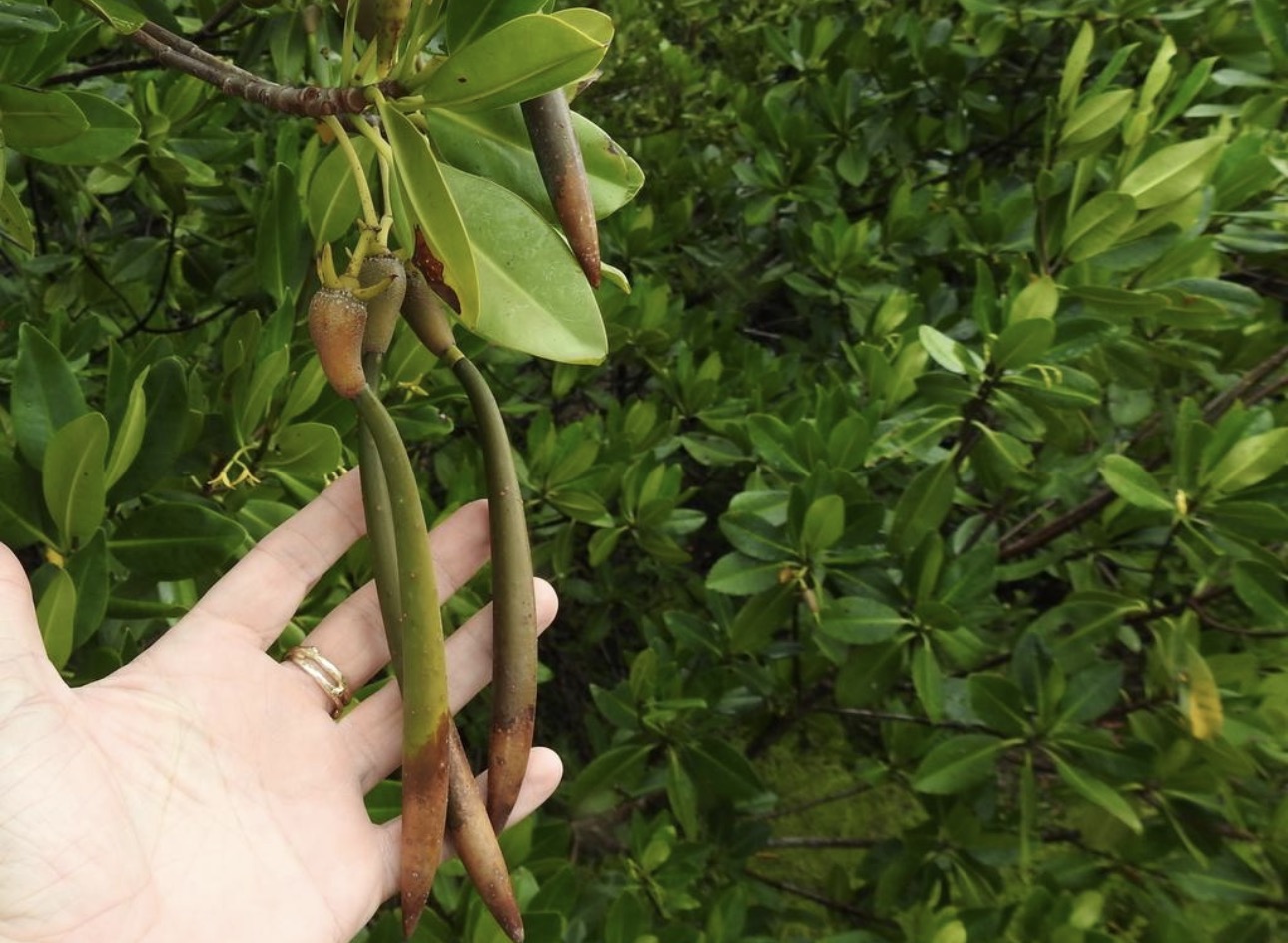
Red mangroves develop elongated seedlings called propagules (PROP-uh-gyoolz).
These can look like long green pencils hanging from the branches.
Eventually, they drop.
Some become established nearby.
Others float away with the tides and currents, sometimes traveling considerable distances before finding a suitable place to take root.
Think about that!
A young tree beginning its journey by floating through the water.
And I thought the breathing roots were strange!
There’s something wonderful about imagining a little mangrove propagule drifting through the Gulf, eventually settling along a shoreline and beginning an entirely new forest.
Nature’s Coastal Engineers
As my research continued, I discovered that mangroves do much more than survive difficult conditions.
They actually help shape and protect the environment around them.
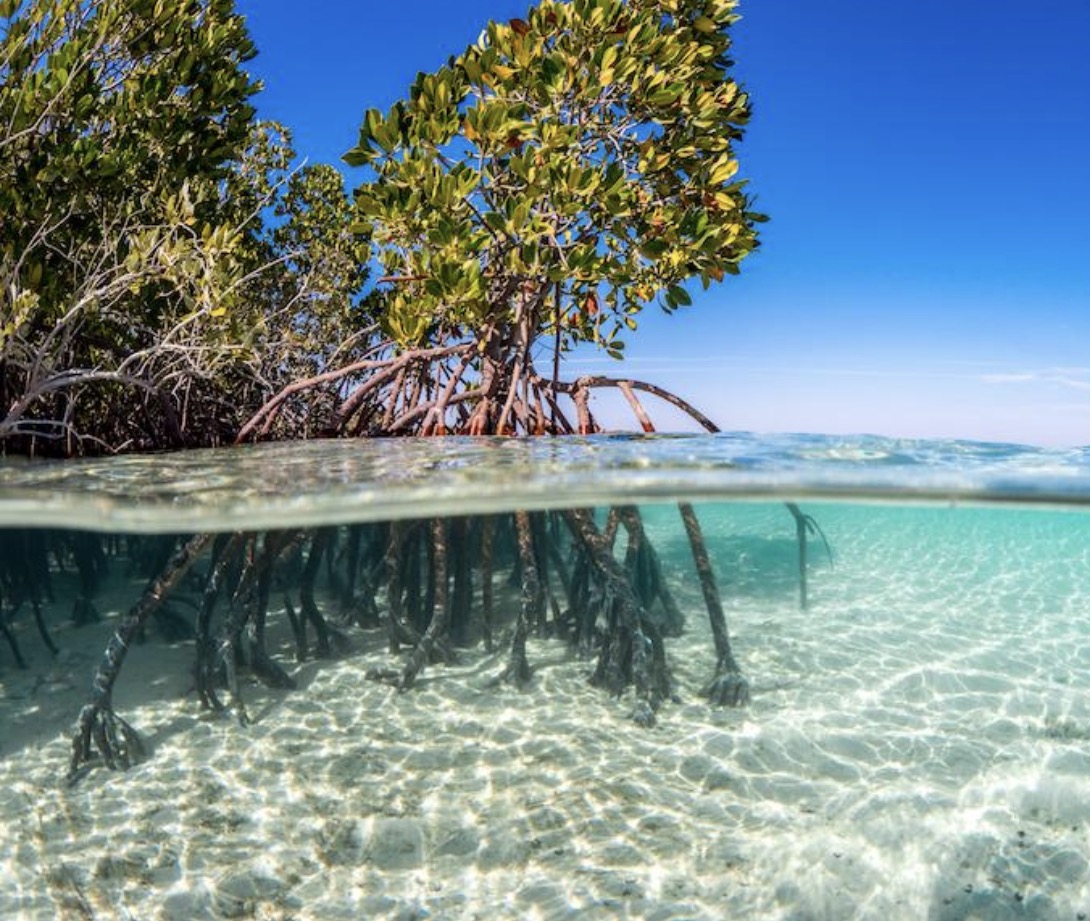
Those tangled root systems slow moving water and help trap sediment.
That can reduce shoreline erosion and provide a measure of protection against waves and coastal storms.
Mangroves also create important habitats for fish and other marine life.
And that brought me right back to Captain Gerry.
I thought about our fishing adventures around the islands and all the different species we’d encountered.
I’d always appreciated those beautiful coastal waters.
But now I understood something more about the remarkable trees growing along their edges.
They weren’t simply part of the scenery.
They were helping support the entire environment!
Discovering What Was Always There
Looking back, there’s something about this experience that I find especially meaningful.
I’d seen mangroves in movies.
I’d seen them after moving to Florida.
I’d passed them while boating, fishing, and exploring.
And for years, I never gave them much thought.
But during that island adventure with Captain Gerry, I began looking more carefully.
I asked a simple question about some strange little spikes in the mud.
And that question led me to discover breathing roots, salt-filtering trees, floating seedlings, coastal wildlife, and the important role mangroves play in protecting shorelines.
All because I finally stopped and wondered what I was looking at.
The mangroves hadn’t changed. My understanding of them had.
And I think that’s one of the most wonderful things about curiosity.
Sometimes we don’t need to discover something new.
Sometimes we need to discover something familiar in an entirely new way.
Join the Discovery
Have you ever seen something countless times before finally wondering how it works?
Maybe it was a plant in your backyard, an animal you encounter regularly, or something unusual along a familiar trail.
Here’s a little challenge.
The next time you’re near a mangrove shoreline, take a closer look.
Can you spot the arching roots of a red mangrove?
Do you see the little breathing roots sticking up from the mud?
Are there crabs scurrying between the roots or birds searching for food?
Observe from a safe distance, and avoid disturbing the roots or animals.
You might be surprised by how much is happening in a place that initially seems ordinary.
What have you been looking at for years without ever really noticing?
I’d love to hear about your discovery.
Share your discovery →Behind the Discovery
My fascination with mangroves began during one of my island adventures with Captain Gerry.
Growing up in New Jersey, I had a completely different understanding of trees and coastal vegetation.
Although I’d seen mangroves many times after moving to Florida, I never really questioned their unusual appearance.
That changed when I noticed those strange little projections emerging from the muddy ground.
They reminded me of stalagmites, and I wondered whether they might be young trees.
When Gerry explained that they were connected to the roots and helped the trees breathe, I was amazed!
Later, my curiosity led me to research how mangroves survive saltwater, reproduce, and support the wildlife living around them.
The more I learned, the more fascinating they became.
And it reminded me of something I continue discovering during my travels.
There are extraordinary things happening around us every day.
Sometimes we’ve seen them a hundred times before.
But until we slow down, pay attention, and ask a question, we may never realize just how remarkable they really are.
What did you discover today?
Discover the Journey.
Las Vegas