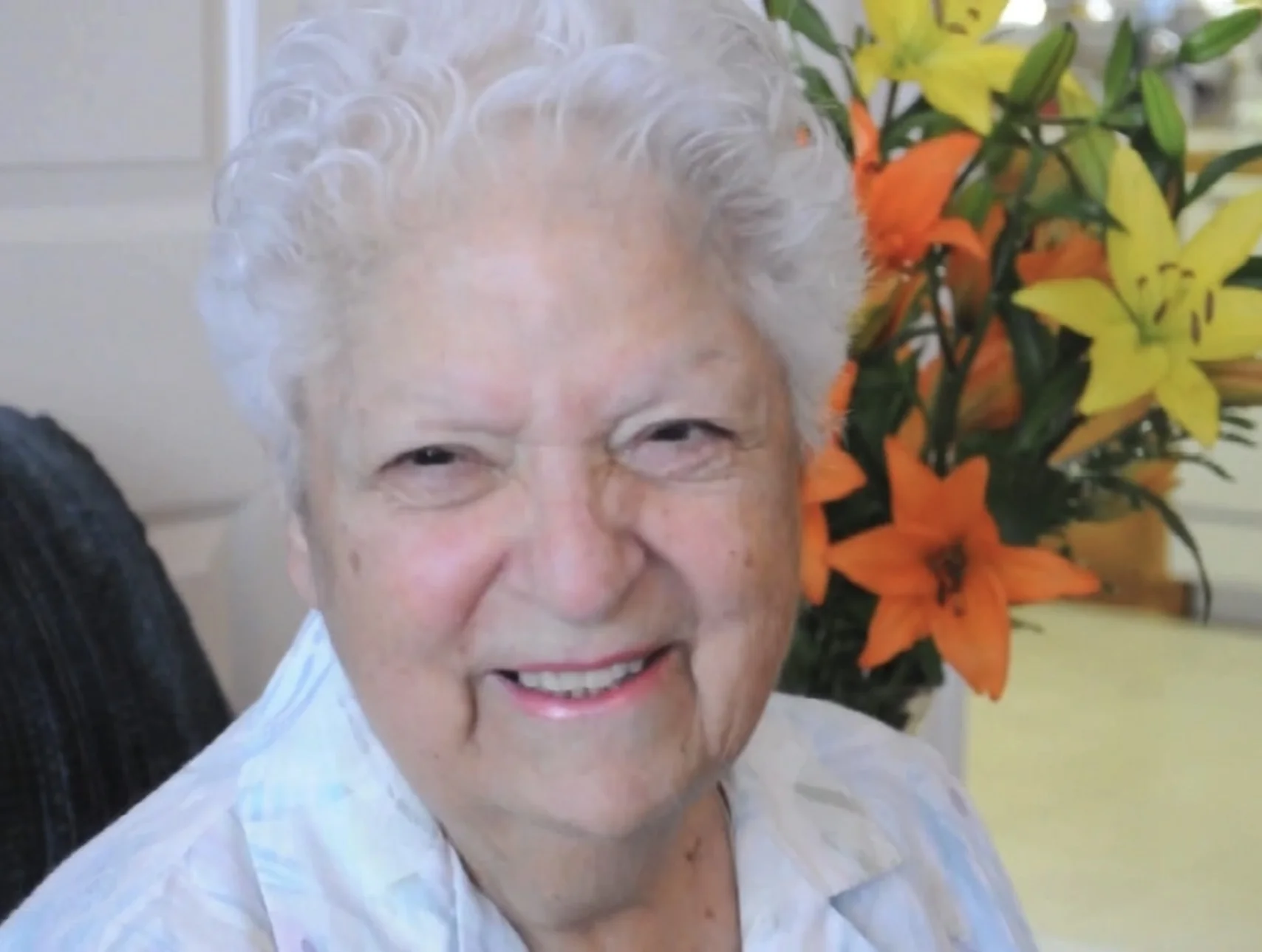
A Story I Never Grew Tired of Hearing
When I was a little boy growing up in New Jersey, four generations of my family shared a home in East Shore Estates.
I must have been somewhere between four and seven years old.
My great-grandmother Philomena divided her time between our home and another family home in the neighborhood, where my grandmother’s sister lived.
I loved spending time with her.
And there was one story I would beg her to tell me over and over again.
It was about my grandmother Constance, a lost dime, and a man named Thomas Edison.
Yes, THAT Thomas Edison!
I must have heard the story a million times.
And somehow, I never got tired of it!
Years later, my brother recorded my grandmother Constance telling her part of the story on video. I eventually shared that recording on TikTok.
But there’s another part of this story that isn’t in the recording.
It’s the part Philomena told me herself.
And it involves a mysterious purple light, an invitation into Edison’s laboratory, and a wooden box filled with wires.
But I’m getting ahead of myself.
Our story begins with a little girl on her way to the bakery.
The Little Girl Who Lost a Dime
Many years ago, my grandmother Constance lived with her parents in West Orange, New Jersey.
Her mother, Philomena, had given her ten cents and sent her to Church’s Bakery to buy bread.
Now, ten cents might not sound like much today.
But my grandmother always made a point of telling us that ten cents was a lot of money back then!
As she walked toward the bakery, Constance began playing with the dime.
And then something happened.
She dropped it!
The little coin disappeared into the grass.
She searched everywhere, looking through the grass and trying desperately to find it.
But it was gone.
Eventually, she found herself sitting on the curb, crying.
She was worried about what she would tell her mother.
She had been trusted with the money, and now she had neither the dime nor the bread she had been sent to buy.
What was she going to do?
That’s when an elderly gentleman came out of a nearby store and noticed her sitting there.
He approached and asked what was wrong.
Constance explained what had happened.
The gentleman comforted her, took her by the hand, and walked with her to Church’s Bakery.
There, he purchased the bread she needed.
But he didn’t stop there.
He also allowed her to pick out some cookies for herself!
Imagine that!
A little girl who had been sitting on the curb crying was now heading home with her bread and some unexpected treats.
But the story wasn’t over.
Not even close!
The Gray-Haired Gentleman
My grandmother explained that she didn’t know who the man was.
She remembered seeing him around the neighborhood and recognized him simply as the gray-haired old gentleman.
After leaving the bakery, he walked Constance home.
Meanwhile, her parents were becoming terribly worried.
She had been gone much longer than expected.
Her father was preparing to go out looking for her, and Philomena was so concerned that she wanted to call the police.
My great-grandfather had come from Sicily, Italy.
According to my grandmother, he spoke very broken English.
When the gentleman arrived at their home with Constance, he turned to her father and asked:
“Does this little girl belong to you?”
My great-grandfather was overwhelmed with relief.
As my grandmother remembered him saying:
“Oh my God, I was gunna call da cops!”
I never had the opportunity to meet my great-grandfather, but I can almost hear that sentence the way my grandmother used to tell it!
The little girl was safe.
The bread had been purchased.
And she even had cookies!
The gentleman had turned what could have been a frightening childhood memory into something Constance would remember for the rest of her life.
But who was this kind stranger?
Thomas Edison.
One of the most famous inventors in American history had stopped to help a little girl who lost her dime.
And to Constance, he was simply the nice gray-haired gentleman from the neighborhood.
The Mysterious Purple Light
Now, this is where Philomena’s part of the story begins.
After Edison brought Constance home, he said his goodbyes and started to leave.
But Philomena followed him outside.
She wanted to thank him again for helping her daughter.
And she had a question.
You see, Philomena recognized Edison as the gentleman associated with a building on the corner.
She had noticed something unusual about that building.
At night, she could see a mysterious purple light glowing through one of its windows.
What was it?
What could possibly be happening inside to produce such an unusual color?
She had wondered about that light for some time.
And now, standing there with the very man who worked in the building, she finally had an opportunity to ask!
According to Philomena, Edison giggled when she asked him about it.
He explained that the building was his laboratory.
It was where he conducted his work and experiments.
But Philomena was curious.
Very curious!
Knowing that it was a laboratory only made her want to know more.
She began asking questions about his work.
And that’s when something extraordinary happened.
Thomas Edison invited her to come by and take a look!
Imagine that!
A simple question about a mysterious light had opened the door to the laboratory of one of America’s most famous inventors.
And Philomena wasn’t about to pass up that opportunity.
Inside Thomas Edison’s Laboratory
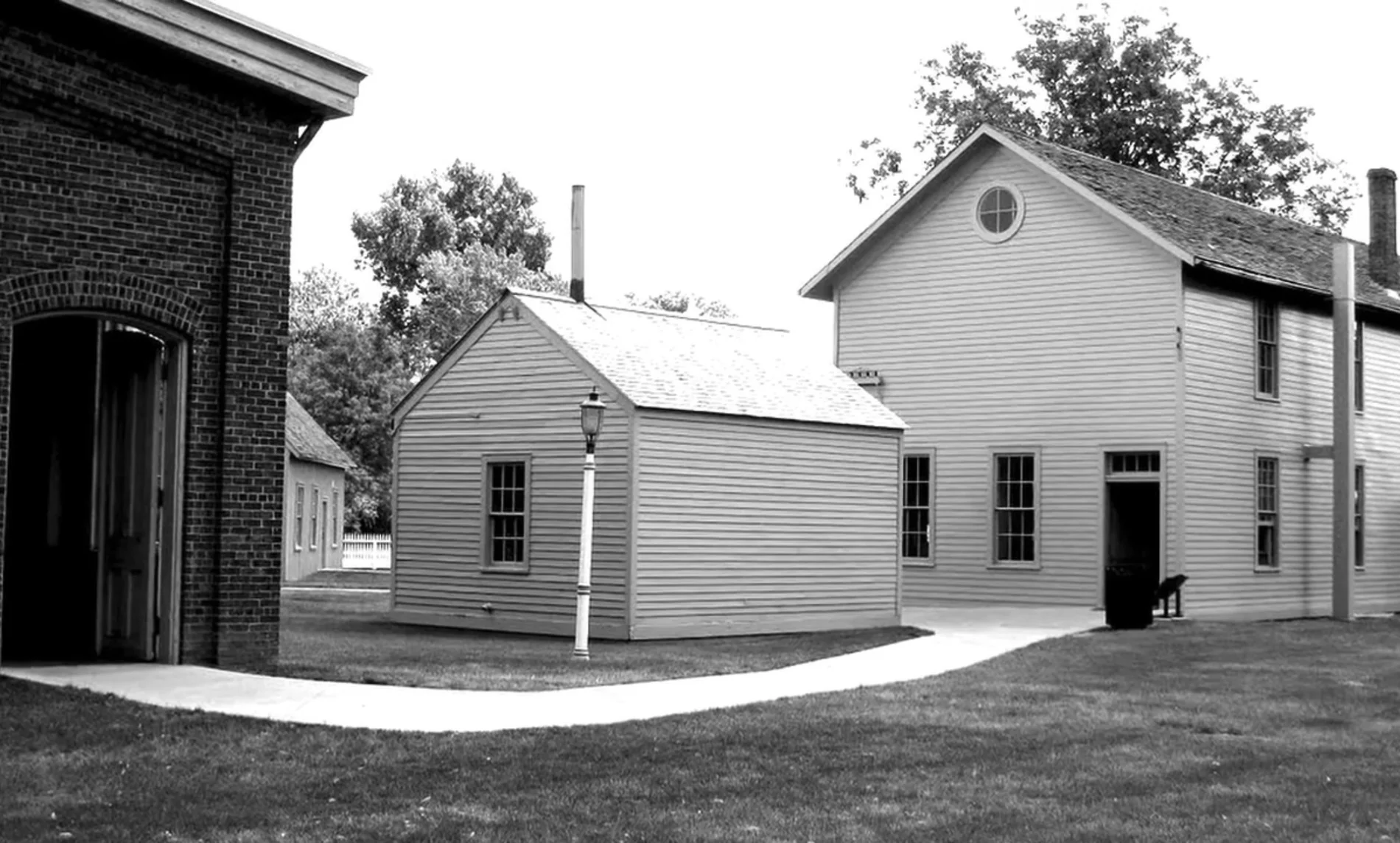
Sometime later, Philomena accepted the invitation.
She went to visit Edison’s laboratory without Constance.
I can only imagine what that experience must have been like for her.
Philomena told me that the laboratory was filled with strange objects, unfamiliar tools, and equipment unlike anything she had encountered before.
She loved to read and was naturally curious about the world.
Although English wasn’t her first language, she understood and communicated in it much more comfortably than her husband.
Still, much of the scientific information Edison shared with her was difficult to understand.
And considering what he was working on, I can understand why!
Thomas Edison’s West Orange laboratory complex opened in 1887. Over the years, Edison and his teams worked on phonographs, motion-picture technology, electrical equipment, storage batteries, and numerous other experiments.
The laboratory was not simply one room with a workbench. It included specialized workshops, experimental rooms, laboratories, and machinery.
It was a place built for invention.
And Philomena had been invited inside!
But among everything she remembered seeing, there was one particular object that stayed with her.
A wooden box.
The Strange Box Filled with Wires
Philomena described Edison showing her a wooden box containing what appeared to be wires.
He explained that it was something he was working on at the time.
But much of his explanation was lost in translation.
She didn’t fully understand the scientific purpose of what he was showing her.
To Philomena, it was simply a box containing some unusual-looking wires.
Nothing particularly extraordinary.
Or so she thought.
Years passed.
Thomas Edison died in 1931.
And sometime afterward, according to Philomena’s recollection, a newspaper published a story about a mysterious locked box associated with Edison.
As she remembered it, there was some kind of question about ownership or legal authority, and the box could not be opened until the matter was resolved.
Now, I want to be careful here.
This is how Philomena remembered telling the story, and it’s how I remember hearing it as a child. I haven’t established whether the box described in the newspaper was the same object Edison had shown her.
But that uncertainty is part of what makes the story so fascinating!
Philomena remembered the wooden box with the wires.
And she and my great-grandfather found the whole newspaper mystery rather amusing.
She would laugh when she told me about it.
In her mind, everyone was making a tremendous fuss over a box that might contain nothing more than some useless wires!
She associated what she’d seen with filament material for an electric light bulb, although the exact equipment and its purpose remain a mystery to me.
I always loved that part of the story.
Here was Thomas Edison, famous for helping transform the world through invention, and my great-grandmother was laughing about a box of wires!
And somewhere in all those memories was that mysterious purple light.
What produced it?
What exactly had Edison been working on?
Was the wooden box connected to the later newspaper story?
I still don’t know.
But after all these years, those questions continue to fascinate me.
The Gentleman Behind the Inventor
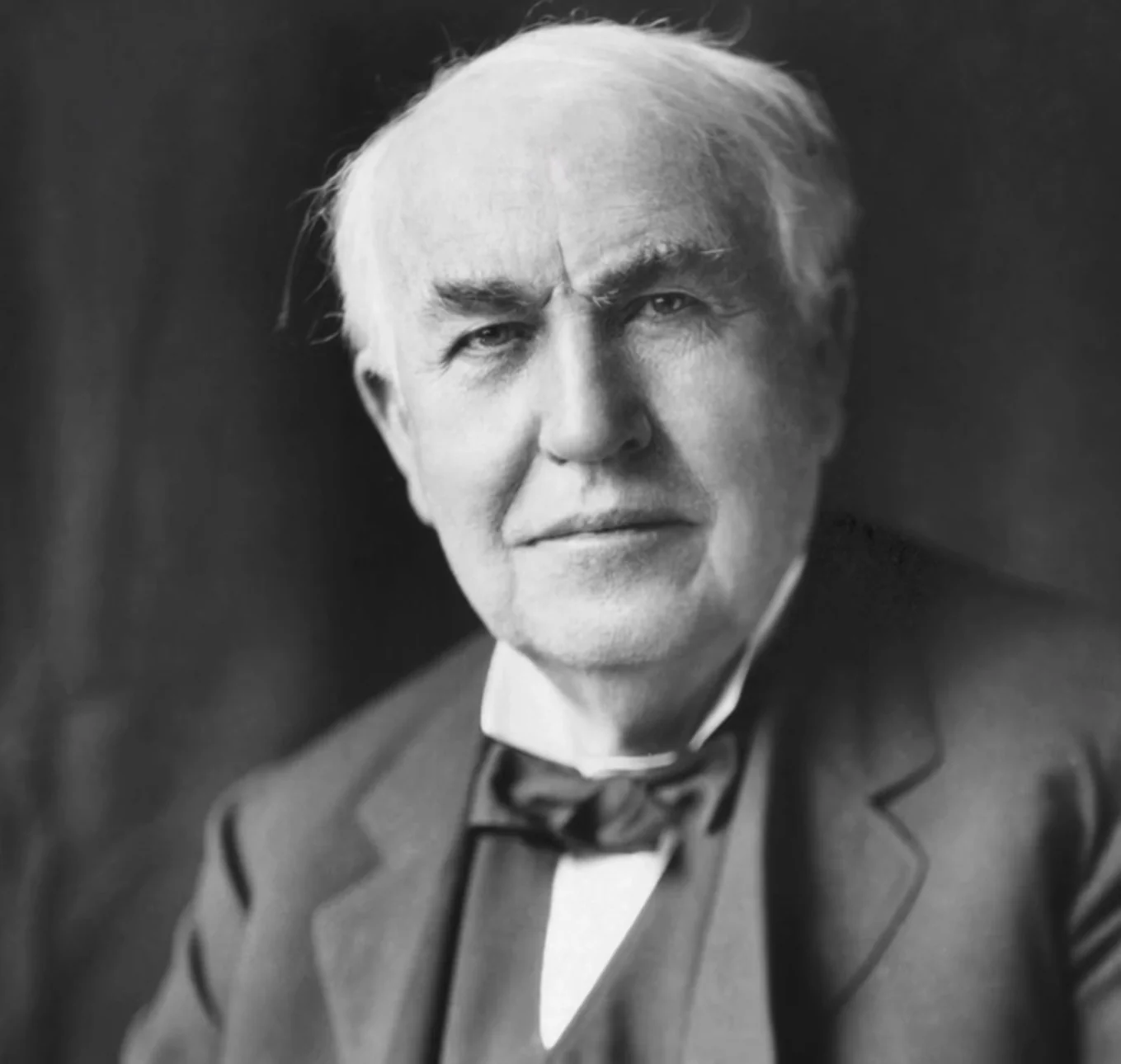
Whenever Philomena spoke about Thomas Edison, she described him as a real gentleman.
She remembered seeing him around the neighborhood.
He would say hello to people on the street.
He was often seen talking with others.
And most importantly, she remembered the kindness he showed her family.
It’s interesting to think about that.
History remembers Edison for his inventions, patents, laboratories, and contributions to technology.
His work helped shape electric lighting, sound recording, and motion pictures. He also relied on teams of talented workers and researchers whose contributions were essential to his achievements.
But my family’s memories of him were different.
To Constance, he was the gentleman who stopped to help her when she lost a dime.
To Philomena, he was a neighbor who showed kindness to her daughter, answered her questions, and welcomed her into his laboratory.
And to me?
He became part of one of my favorite childhood stories.
A story I would ask to hear again and again.
A Discovery That Crossed Generations
As I’ve grown older, I’ve come to appreciate something about this story that I didn’t fully understand as a child.
I was fortunate enough to hear these memories directly from the people who experienced them.
Constance told me about losing the dime and meeting the gray-haired gentleman.
Philomena told me about the mysterious light, the laboratory, and the wooden box.
And now my brother’s video preserves Constance telling her part of the story in her own voice.
That means something to me.
Because so many family stories disappear as generations pass.
The little details fade away.
The people who remember them are no longer here to answer our questions.
And suddenly, we wish we’d asked just one more question.
I never met my great-grandfather.
But through these stories, I learned something about him, his Sicilian roots, and the family he raised in West Orange.
And through Philomena, I discovered something about the importance of curiosity.
She saw a strange purple light and wondered what caused it.
Then, when the opportunity presented itself, she asked!
That simple question opened the door to an experience she would remember for the rest of her life.
And her stories helped inspire the curiosity I carry with me today.
Sometimes the most extraordinary discoveries aren’t found in history books. They’re sitting right across the room, waiting for someone to ask a question.
Join the Discovery
Have you ever heard an extraordinary story from a parent, grandparent, or another member of your family?
Maybe someone met a famous person, witnessed an important historical event, or experienced something unusual that stayed with them for the rest of their life.
Have you ever wished you could go back and ask them more questions?
I’d love to hear about it.
And here’s something else to consider.
What family story would you most like to preserve for future generations?
Sometimes the greatest discoveries begin by listening to the people closest to us.
Behind the Discovery
When I was a little boy, probably between four and seven years old, four generations of my family shared a home in East Shore Estates, New Jersey.
My great-grandmother Philomena divided her time between our home and another family home nearby.
I loved spending time with her.
And there was one story I could never hear enough.
The story of how my grandmother Constance lost a dime and met Thomas Edison!
Every chance I had, I would ask Philomena to tell me that story.
I must have heard it a million times!
But I never got tired of hearing it.
Especially the part about the mysterious purple light and the wooden box.
As a child, it all seemed like such an incredible adventure.
Now, looking back, I appreciate something even more.
I had the opportunity to spend time with my great-grandmother, listen to her memories, and learn about a world that existed long before I was born.
My grandmother Constance also shared her memories, and years later my brother recorded her telling the story.
I’m grateful he did.
Because now, even though the people who originally shared these experiences are gone, part of their story remains.
And I get to share it with you.
Perhaps someday I’ll discover more about that strange purple light or the mysterious box.
But even if I never solve those mysteries, one thing is certain.
I’ll always treasure the memories of spending time with Philomena, listening to her tell me about the day Thomas Edison helped a little girl who lost her dime.
What did you discover today?
Discover the Journey.
Photographs and illustrative imagery supplied or approved for this Discovery Article.