It started with a water bill.
Living in Florida means water is always part of the equation.
The lawn needs it. Plants need it. During the hottest months, the pool seems to constantly lose it to evaporation.
And the water coming out of the hose isn't free.
I started wondering whether there was another option and learned that, where I live, it was possible to install a shallow well and draw groundwater for irrigation.
So I did what most reasonable people would probably do first.
I called someone who knew what they were doing.
The estimate was thousands of dollars.
That was when the project became interesting.
Could I Do This Myself?
Before touching anything, I checked the local requirements to make sure I could legally do the work myself and understand the rules I needed to follow.
Then came the bigger question:
How do you actually put a well in the ground?
I knew almost nothing about it.
So I started researching.
I watched videos. I read. I searched online. I talked with people in my community and anyone I thought might know something about wells.
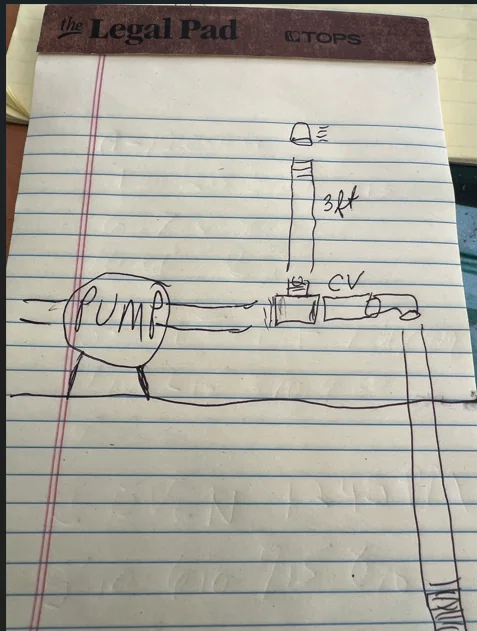
Eventually, I started sketching.
I made notes. I figured out what materials I'd need. I learned about well points, pumps, pipe and the process of using water to move sand and drive the well deeper into the ground.
Slowly, something I knew almost nothing about started becoming a plan.
And somewhere in all that searching, I discovered something I hadn't been looking for.
The Free Water Club
I came across a small website called the Free Water Club, run by a man in the Tampa area named Bill.
I sent him a message.
He called me.
Bill didn't just answer a question or point me toward a webpage. He started helping me understand the process.
Eventually, he invited me to his home.
What I saw there completely expanded my idea of what could be done with water.
Bill had developed an incredible system on his property. His well supplied water that became part of a much larger setup involving a koi pond, irrigation and other household uses. Water wasn't simply coming out of the ground and disappearing down a hose. He had thought about how it could move through a system and serve different purposes.
More importantly, he showed me how he did it.
He shared knowledge that had taken him years of experience to acquire.
He answered questions.
He even loaned me tools.
I had started out searching for information about drilling a well.
Instead, I found Bill.
And that became part of the project too.
Then I Had to Actually Build the Thing
Research is considerably cleaner than DIY.
Once I started putting pipe into the ground, the project fought me almost every step of the way.
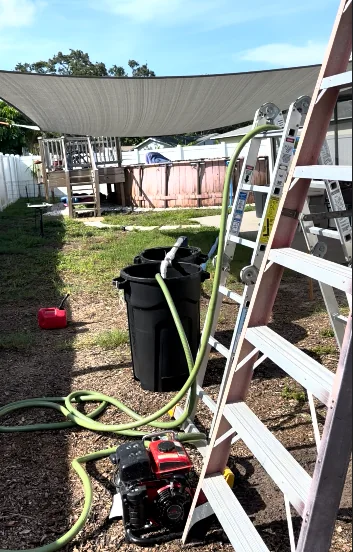
The method I was using required a one-horsepower mud pump to force water into the ground, moving sand out of the way so the well pipe could travel deeper.
There was one problem.
I couldn't supply enough water to the pump.
I tried one garden hose.
Not enough.
I tried two.
I even tried combining water from my house and a neighbor's house.
The distance of the hoses caused pressure loss, and nothing seemed capable of keeping up with what the pump needed.
Fittings failed.
Connections blew apart.
I'd solve one problem and discover another.
Eventually, I built my own solution.
I ran a line from my swimming pool and created a makeshift system using garbage cans as reservoirs to supply enough water to feed the mud pump.
Was it elegant?
Absolutely not.
Did it work perfectly?
Nope.
But it worked well enough.
And sometimes, in DIY, well enough is exactly what gets you to the next problem.
Then I Hit Rock
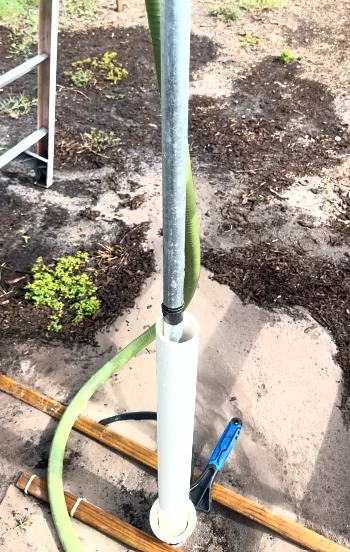
At a certain depth, I encountered limestone.
Water can move sand.
Limestone doesn't particularly care about your water.
The proper solution involved specialized drilling equipment I didn't have and wasn't going to buy for one backyard project.
So once again, I improvised.
I tried different approaches. I adjusted. I fought with equipment. I climbed ladders. I busted fittings.
And the project started fighting back physically too.
Cuts.
Scrapes.
Sprains.
Aches and pains.
By the end, I hadn't gotten all four well points as deep as I'd originally planned.
And eventually I reached a point where I was simply exhausted.
My plan said I wasn't finished.
My body said otherwise.
I was ready to give up.
Maybe It's Already Enough
Then someone offered a remarkably simple suggestion.
Why don't you test it?
Maybe the wells were already deep enough.
If they weren't, I could always come back and try again later.
That seems obvious now.
It didn't seem obvious while I was standing in the middle of the project focused on everything that hadn't gone according to plan.
So I stopped digging.
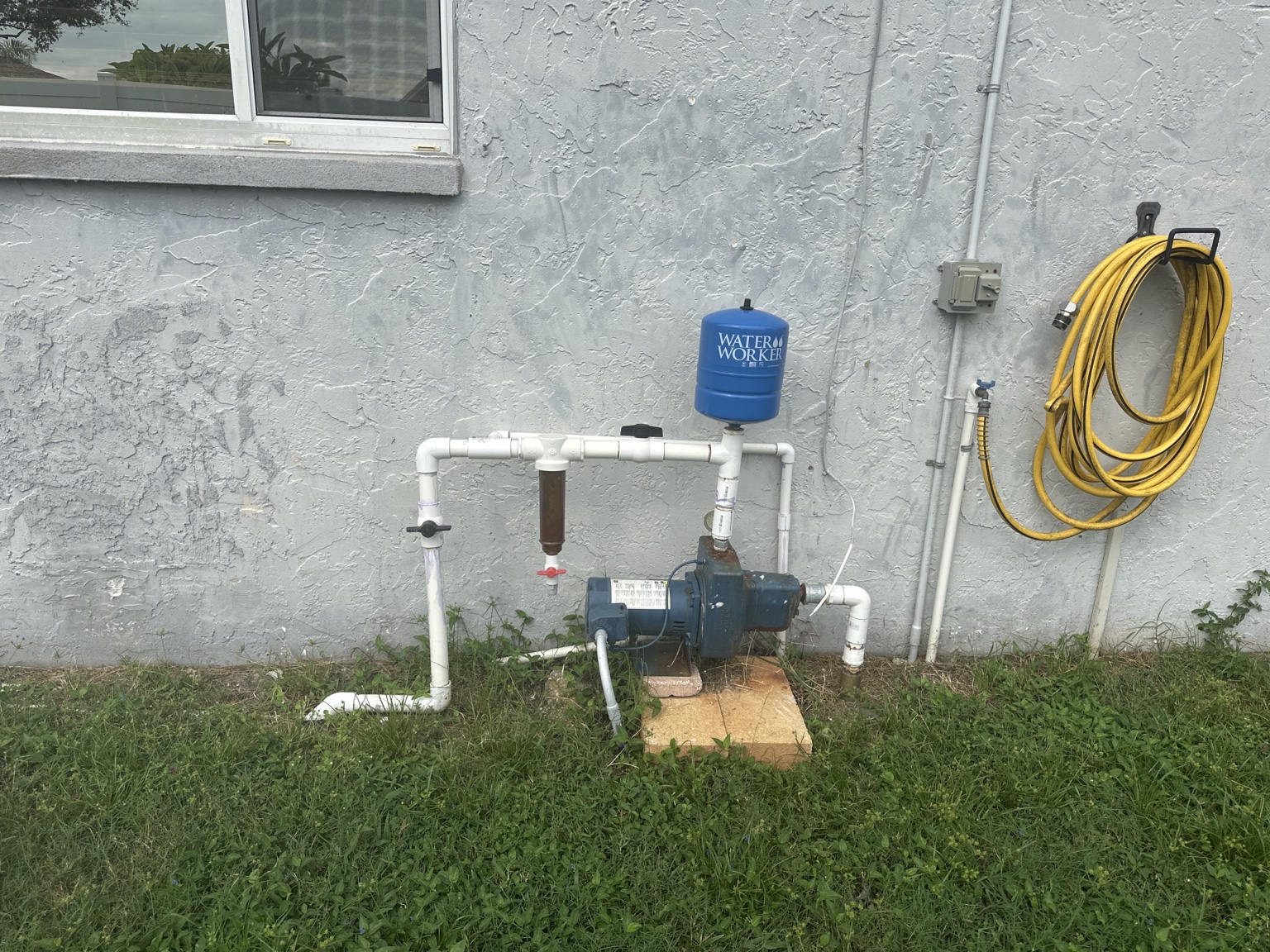
I connected everything.
And I tested it.
Water came out.
Not city water.
Not water I was paying to run through the meter.
Water coming from the ground through a system I had built myself.
I lost it.
I yelled.
I celebrated.
And somewhere in there was a very enthusiastic:
“HELL YEAH!”
Then I did something that might be my favorite part of the entire project.
I called Bill.
I sent him a video of the water coming out.
He congratulated me.
And we celebrated together.
The Discovery
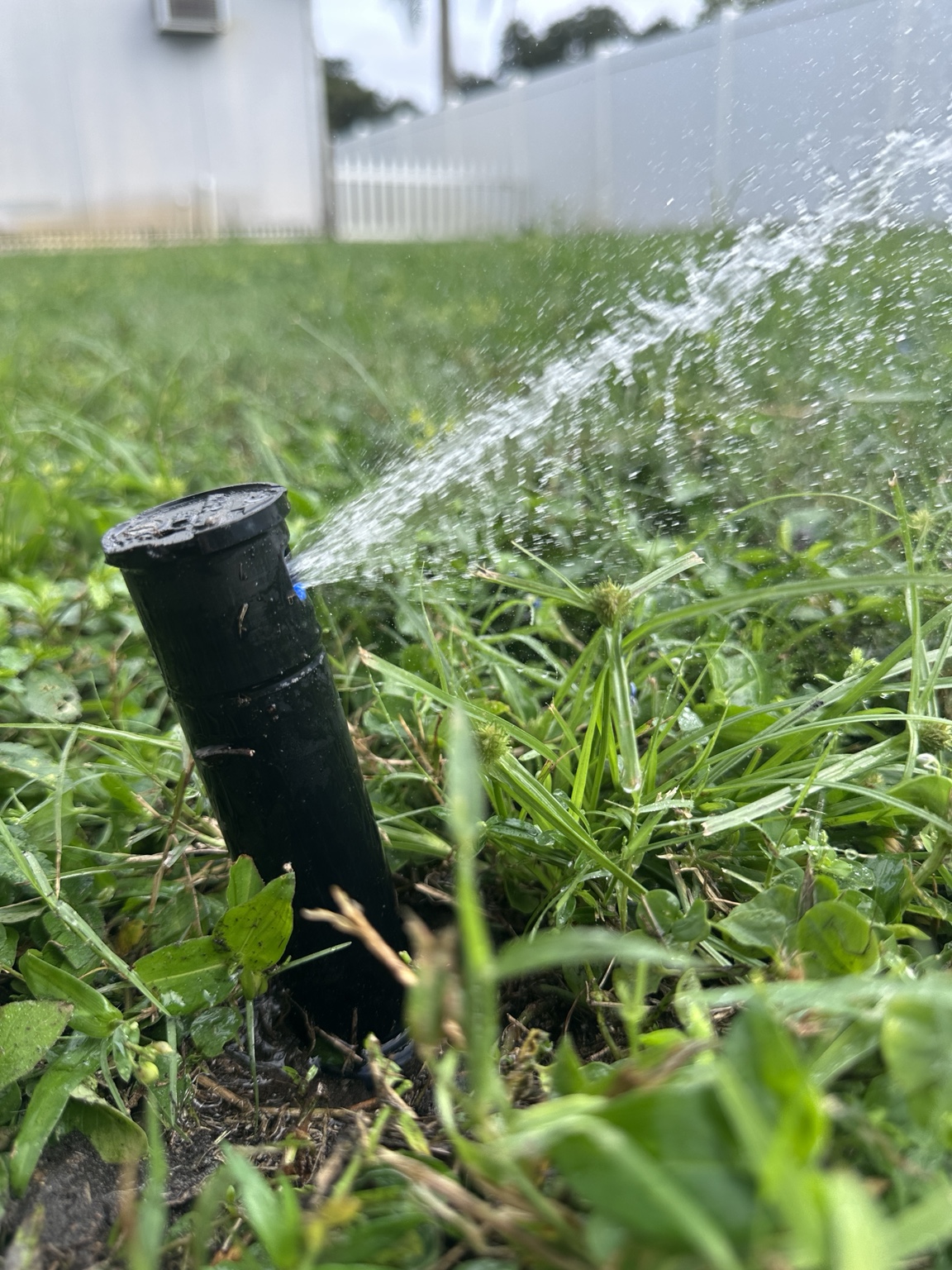
That well still works.
But when I think about the project now, the water isn't the only thing I remember.
I remember how many times it didn't work.
I remember fittings blowing apart and hoses that couldn't keep up. I remember hitting limestone. I remember being physically exhausted and reaching the point where I genuinely wasn't sure I could finish.
And I remember knowing one thing:
Someone before me had figured out how to do this. That meant there had to be a way through the problem in front of me.
Sometimes I found that way myself.
Sometimes I improvised.
And sometimes the answer came from another person.
That's an important distinction.
Doing something yourself doesn't necessarily mean doing it alone.
I began this project because I wanted free water.
I researched wells looking for tools, materials and instructions.
Along the way, I found someone willing to share what he had learned, invite me into his world, loan me his tools and help me avoid mistakes he'd already made.
I went looking for a way to put water in my yard.
I discovered a person willing to help me get there.
And after all the research, mistakes, improvisation, busted fittings, aching muscles and moments when I nearly quit—
water came out of that pipe.
Sometimes that's discovery.
And sometimes it's just:
HELL YEAH!
Join the Discovery
Here’s your next discovery challenge: look back at a project that taught you something you couldn’t have learned from a finished result alone.
What went wrong? Who helped? Was there a moment when trying a different approach—or testing what you already had—changed everything?
Share a photograph or tell us about the lesson and the people behind your project. If you’re considering a well of your own, investigate local requirements and qualified help; this story is a personal experience, not a drilling guide.
Share your discovery →Behind the Discovery
This story began with my Florida water bill and a question about supplying irrigation water from a shallow well.
Research led me to Bill and the Free Water Club. His willingness to explain his system, share knowledge, and loan tools became just as memorable as the physical work.
The failed fittings, water-supply problems, limestone, exhaustion, and celebration are parts of my own experience. Calling Bill to share the successful test reminded me that doing something yourself doesn’t mean doing it alone.
What did you discover today?
Discover the Journey.