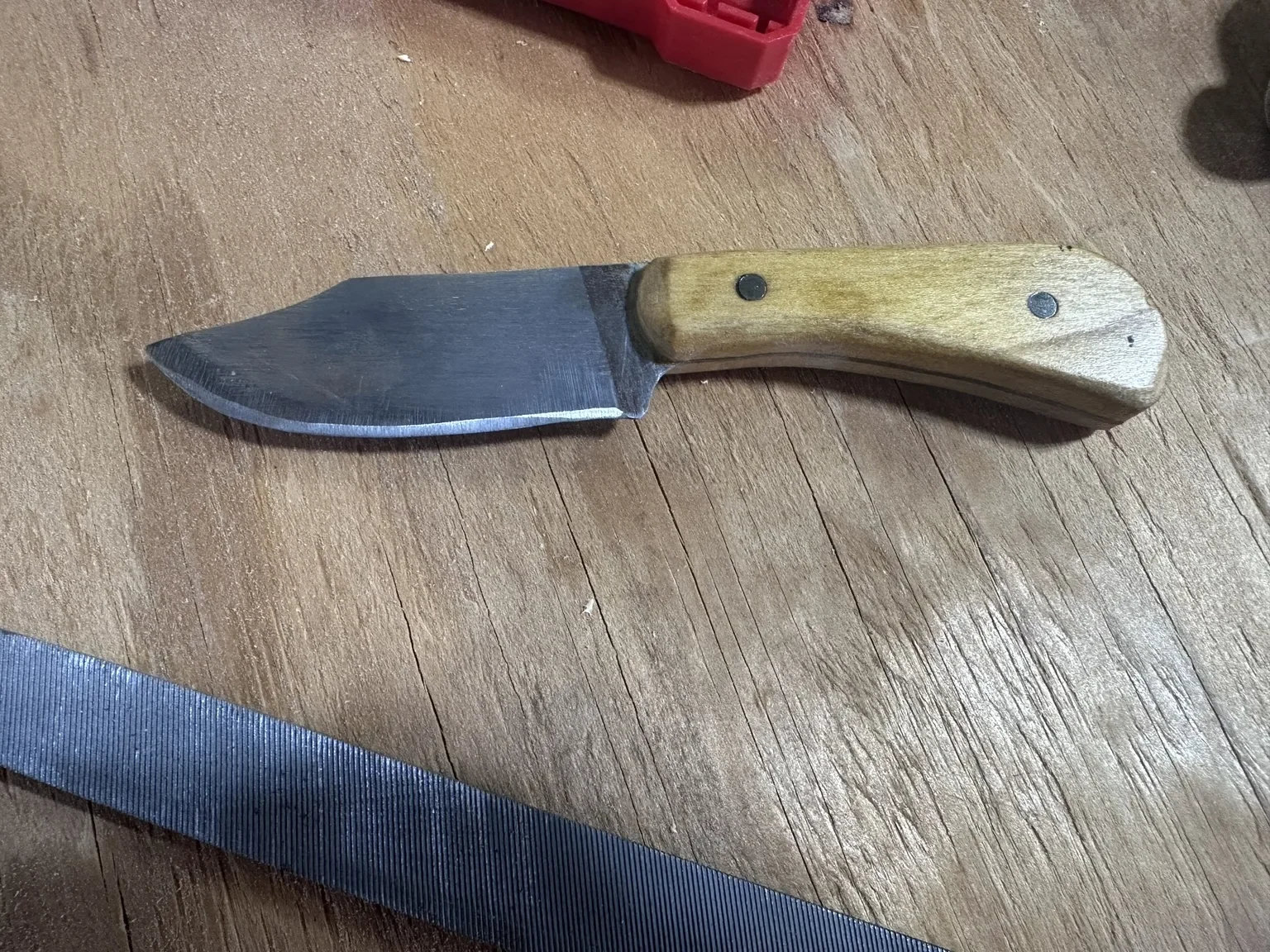
Before I ever made a knife, I carried one.
Knives have fascinated me for as long as I can remember.
Maybe it was the shine of polished steel. Maybe it was their simplicity. A knife is one of humanity's most basic tools—something you can hold in your hand that can cut, carve, shape, prepare and help you survive.
But for me, there was also a personal connection.
My grandfather always carried a pocket knife.
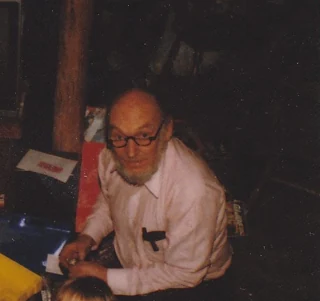
When I was a child, he gave me my first one. I began carrying a pocket knife too, following his example.
Years later, that fascination would lead me somewhere I never expected.
It would lead me to make one.
Why Can't I Make One?
Long before I considered myself a maker, I liked figuring things out.
During my early DIY projects, I sometimes made my own tools, jigs and other useful things simply because I needed them.
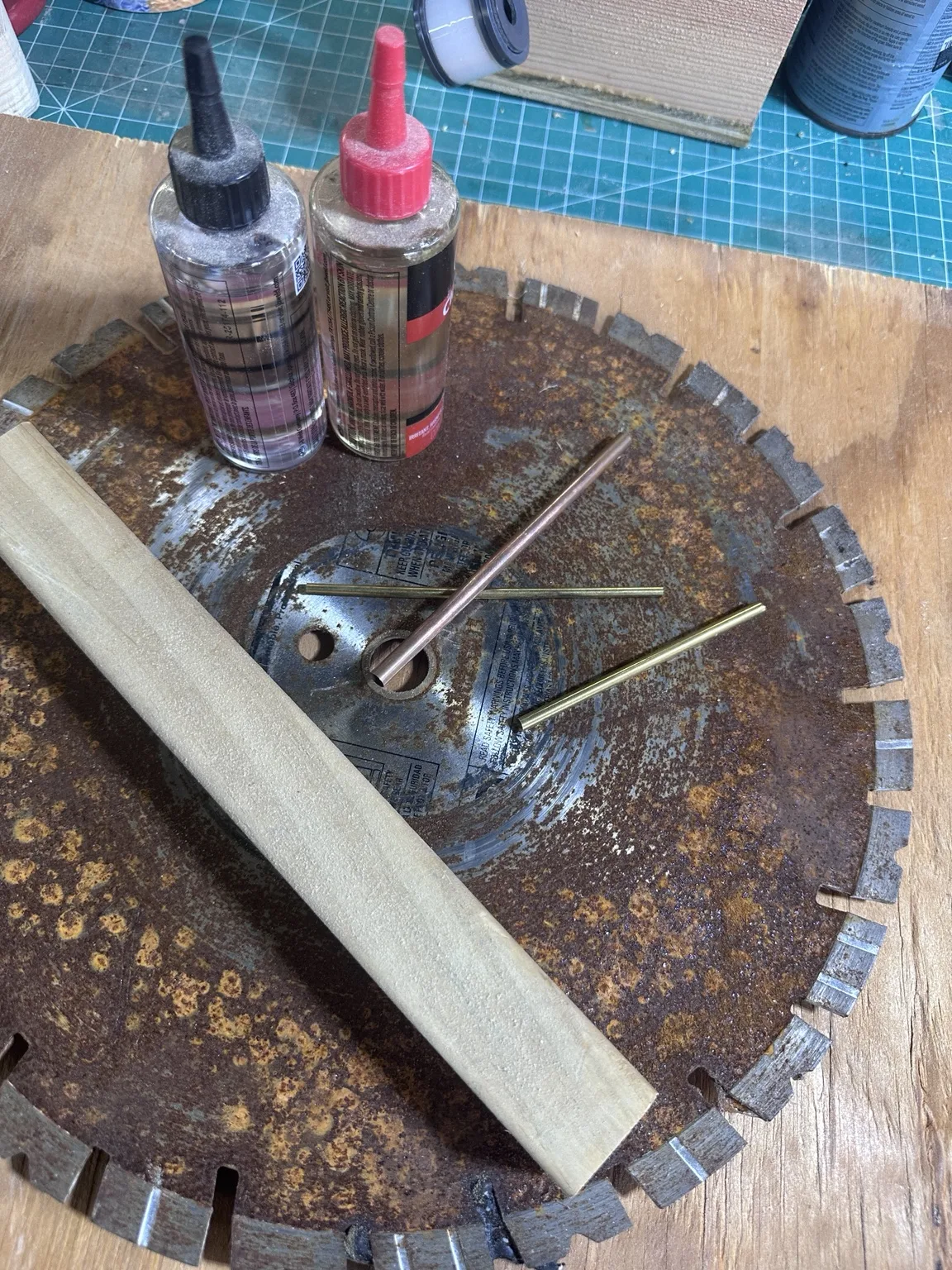
Then someone told me he had made a utility knife from an old circular saw blade.
That idea stuck with me.
A saw blade was already a tool. It had been manufactured for one purpose. But here was someone taking that steel and turning it into something completely different.
I wanted to try it.
By then, the internet was beginning to put an enormous amount of information within reach. I watched videos. I read. I researched. I studied how other people were doing it.
And underneath all that curiosity was a thought that had followed me through many of my projects:
Someone made this. Why can't I learn to make one too?
So I found an old circular saw blade and started.
Steel Doesn't Cooperate
I quickly discovered that cutting metal is difficult when you don't know how to cut metal.
You need the right tools.
You need to understand the material.
Steel gets hot. It discolors. Cuts become jagged. Drilling holes isn't as simple as drilling through a piece of wood.
And every answer seemed to uncover another question.
What kind of steel am I working with?
How do I cut it?
How do I shape it?
How do I drill it?
How do I sharpen it?
How do I make a handle?
How do I attach the handle?
What I had imagined as a fairly simple object suddenly became a collection of problems I had never encountered before.
So I did what I knew how to do.
I kept figuring out the next problem.
My First Knife
Eventually, the pieces began coming together.
The steel.
The wood.
The pins.
The glue.
Separate materials that didn't look like much on their own slowly became the thing that, until then, had existed only in my mind.
And when I finished it...
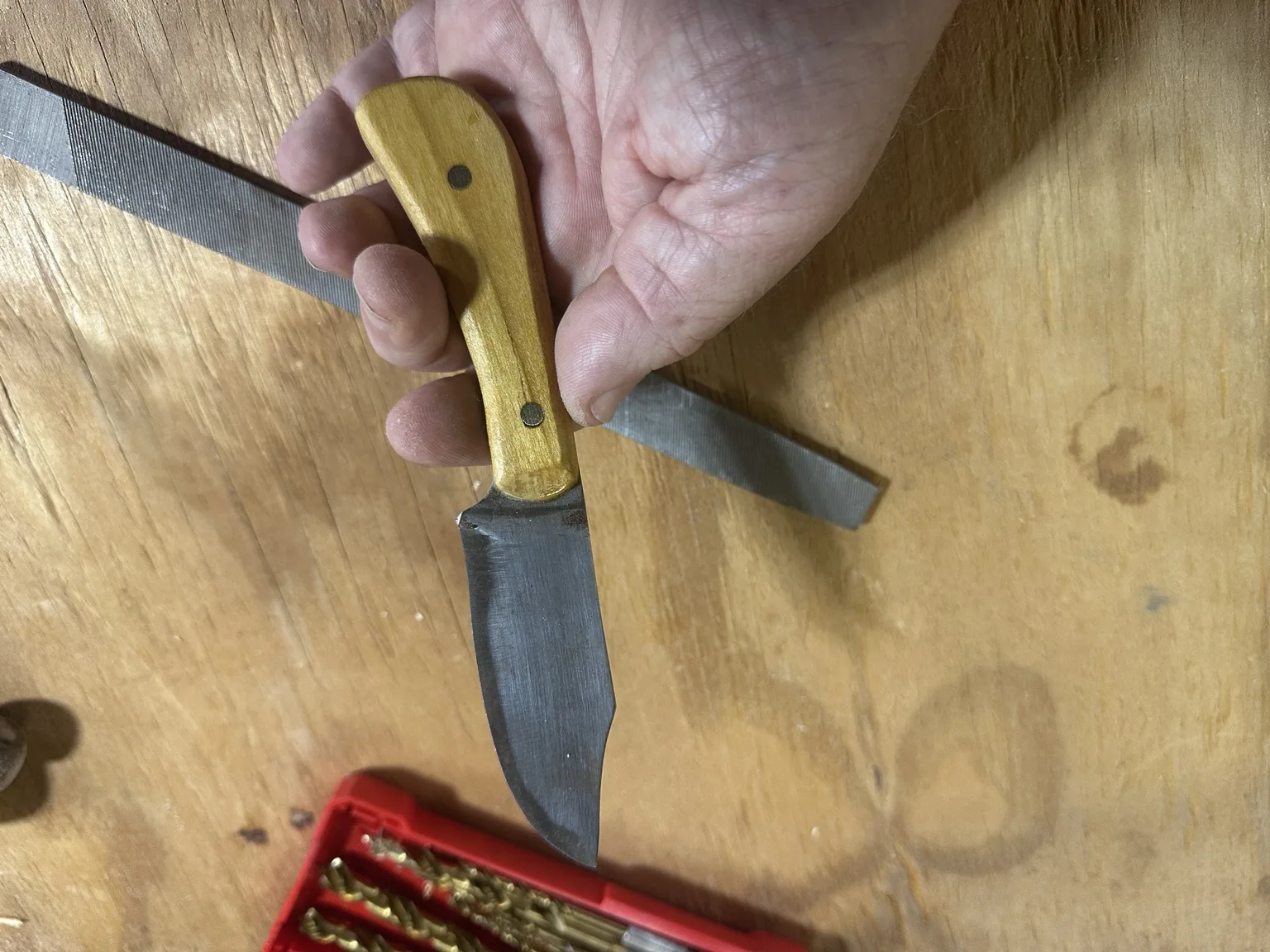
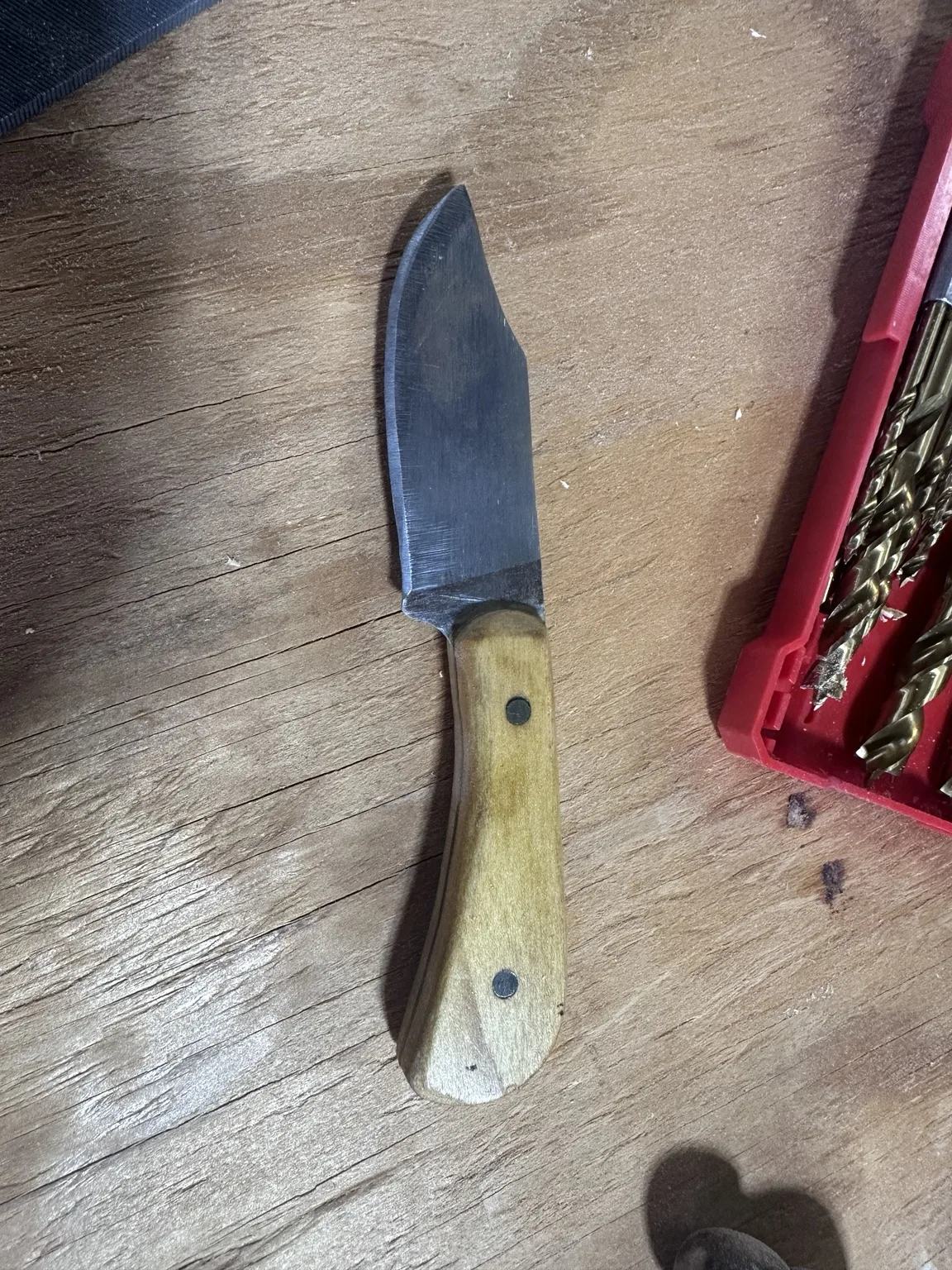
It was crude.
It was ugly.
It was simple.
But it worked.
And I loved it.
I was proud of that knife.
Not because it was beautiful. It wasn't.
Not because I had suddenly become an expert. I hadn't.
I loved it because I had never made a knife before—and now I had.
Something had gone from an idea in my head to a physical object I could hold in my hand.
I still have that knife today.
It Wasn't Magic
For much of my life, I looked at people who were exceptionally good at something differently.
A talented carpenter could make something beautiful from wood. A skilled craftsperson could take raw materials and create something that seemed almost impossible to me.
Their abilities could feel like magic.
As though they were simply makers, and I wasn't.
But making that first knife allowed me to see something I hadn't fully understood before.
They had beginnings too.
The carpenter once made a first project.
The knifemaker once made a first knife.
The expert once didn't know how.
They learned.
They practiced.
They made mistakes.
And they kept going.
My crude little knife didn't make me an expert.
It showed me that expertise wasn't where I had to begin.
Making that first rough knife opened my mind. It wasn't magic; it was practice. That showed me my own capabilities and unlocked the possibilities.
What Came Next
I wanted to do it again.
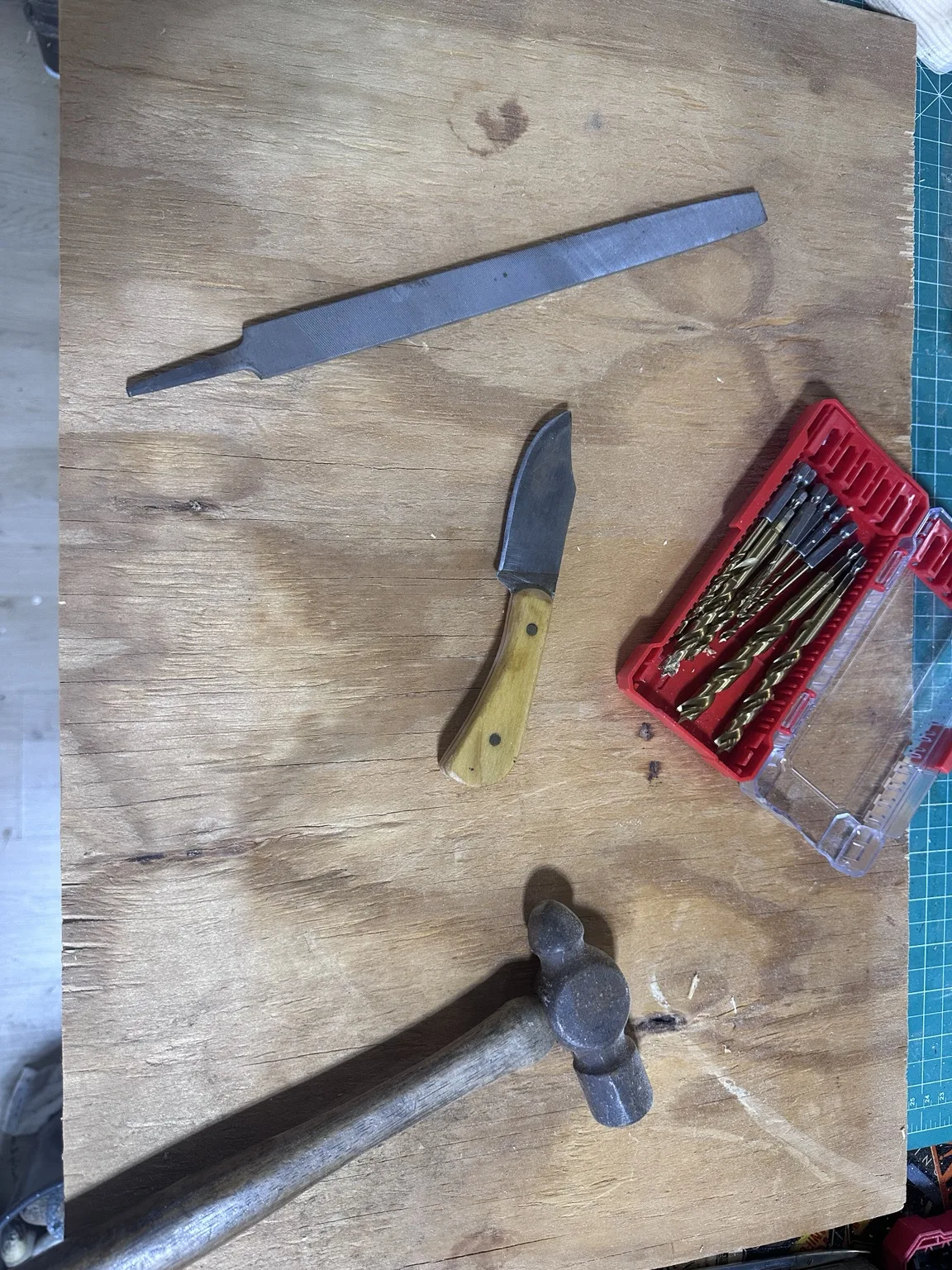
I spent every free minute I could in my shop.
Practicing.
Cutting.
Grinding.
Researching.
Trying different techniques.
Buying better tools when I could.
Learning from mistakes and discovering new problems I hadn't known existed.
And I'm still on that journey.
There will always be another technique to learn, another material to experiment with, another tool to understand and another idea that begins with:
I wonder if I could make that.
My first knife isn't special because it's the best knife I've ever made.
It's special because it was the first.
It reminds me of the moment when pieces of wood, steel, pins and glue came together and became something that previously existed only in my imagination.
Something made by another human being had once seemed almost magical to me.
Then, for the first time, I became one of the people who made it.
And that changed what I believed might be possible.
Join the Discovery
Here’s your next discovery challenge: find—or remember—the first thing you made when you were learning a skill.
It doesn’t have to be polished. What did that first attempt teach you? What seemed impossible before you tried, and what became possible afterward?
Share the story behind an early project, a photograph, or a skill you’re curious about learning. Sometimes the most meaningful thing about an object is that it was your beginning.
Share your discovery →Behind the Discovery
My grandfather gave me my first pocket knife, beginning a fascination that eventually led me into making knives myself.
The idea of making a knife from an old circular saw blade sent me researching, experimenting, and solving one unfamiliar problem after another. I still have the first knife I made.
It is a reminder of where I began, and of how practice changed what I believed I could create.
What did you discover today?
Discover the Journey.