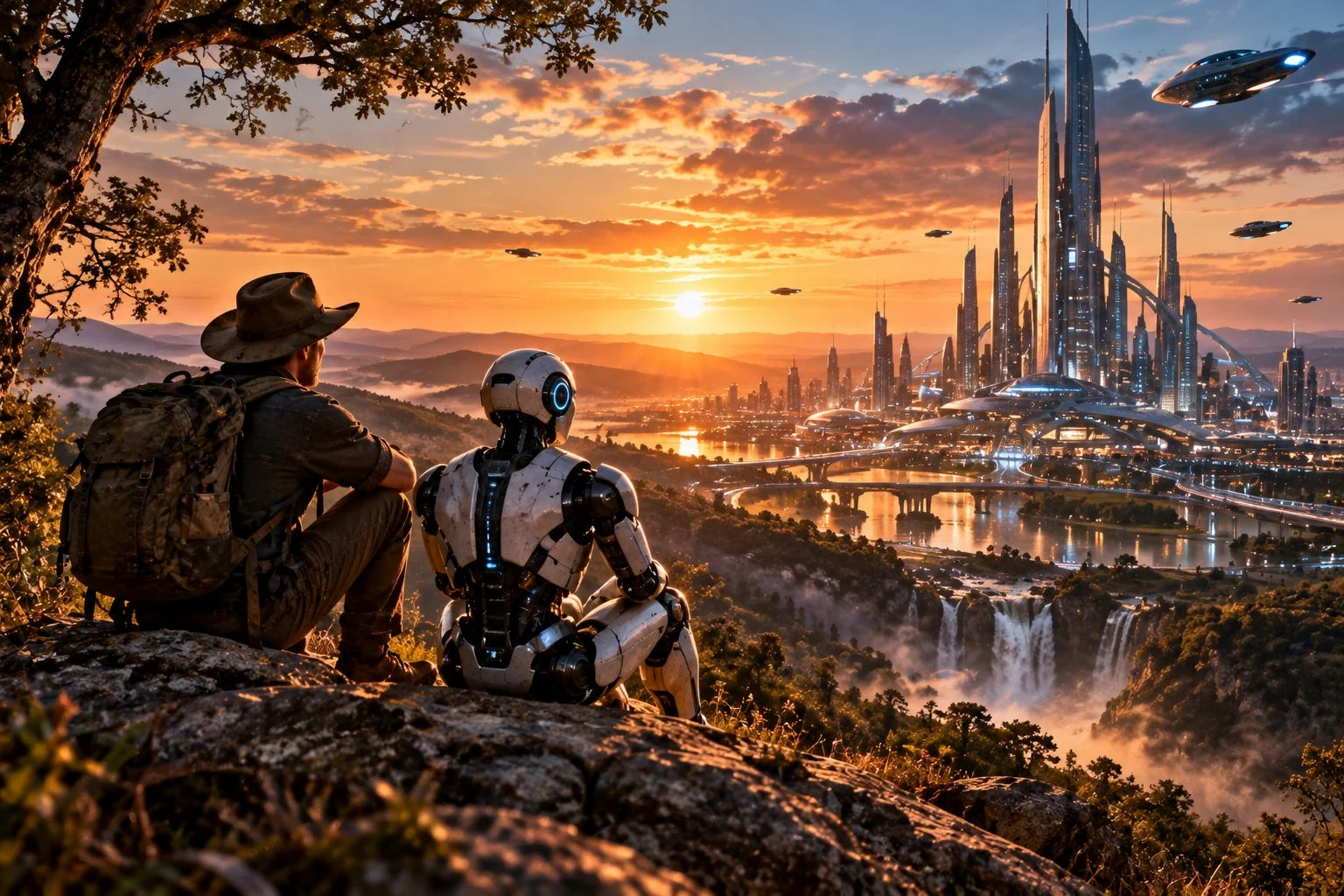
About the images: The images accompanying this discovery were created with generative AI as part of the story itself.
I thought this stuff only happened in the movies.
When I was a young man, I saw a movie called WarGames.
The idea fascinated me.
A teenager communicates with an enormous military computer capable of running simulations, making decisions and learning. In the movie, that interaction nearly leads to catastrophe. WarGames was released in 1983, during the Cold War, and its fictional WOPR computer played out military scenarios while learning from them.
That was probably my first real introduction to the idea of artificial intelligence.
Then there was Short Circuit. Star Trek. The Terminator.
Computers that could think.
Machines that could communicate.
Robots performing tasks that normally required people.
It was fascinating.
But it was also fiction.
At least that's how I understood it.
Things like that happened in movies.
Except It Had Already Started
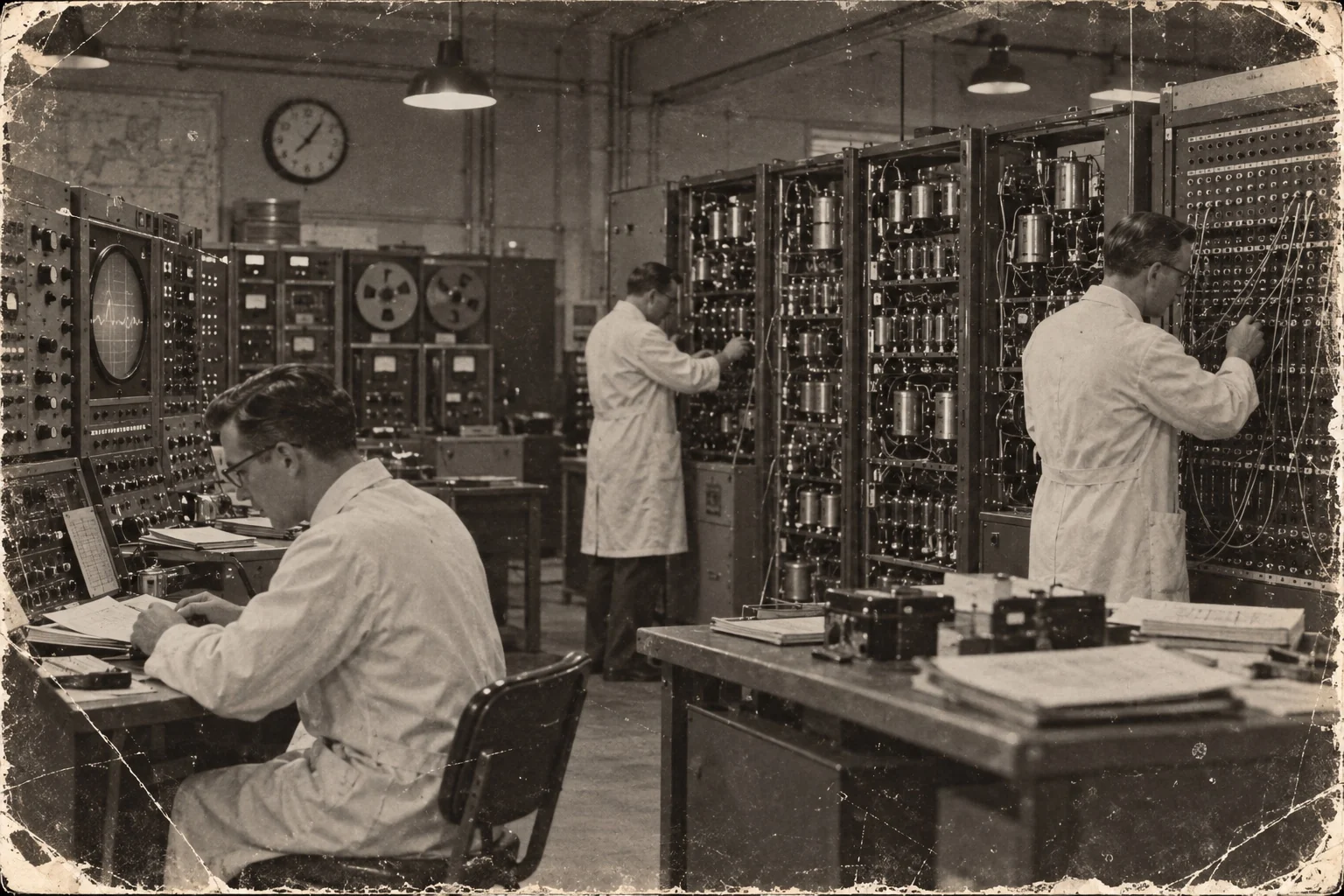
What I didn't know while watching those movies was that people had been seriously exploring artificial intelligence long before I ever heard the term.
In 1955, John McCarthy and several other researchers proposed a summer research project at Dartmouth College built around a remarkable idea: aspects of learning and intelligence might be described precisely enough for machines to simulate them. The workshop took place in 1956 and helped establish artificial intelligence as a field of research.
Then the journey became considerably messier.
AI went through periods of enormous optimism, disappointment, reduced funding and renewed development. Researchers pursued approaches including symbolic reasoning and expert systems; later advances in computing power, data and statistical machine learning helped drive another resurgence.
While all of that was happening in laboratories and universities, my understanding was much simpler.
AI was still the future.
Until pieces of that future started showing up around me.
Is That Picture Real?
One of the first times I remember AI becoming part of ordinary conversation was through manipulated images and what I came to know as deepfakes.
Suddenly, you couldn't necessarily assume that something you saw or heard online represented an untouched recording of reality.
Today, organizations such as NIST distinguish authentic, synthetic and partially synthetic digital media, including images, audio and video altered or generated with algorithms.
AI wasn't a robot standing in front of me.
But it wasn't confined to science fiction anymore either.
It had entered everyday life.
I was interested.
I just hadn't really experienced it for myself yet.
Then Chris Told Me About an App
My friend Chris was using a new AI application to help with his business.
He told me about some of the useful things it could do.
He also told me about the ridiculous stuff.
Like uploading a picture and asking the AI to roast your friend.
That sounded like fun.
So naturally, that's where I started.
And I was hooked.
What began as entertainment quickly became curiosity.
I started asking questions.
Normal questions at first.
Then unusual questions.
Then increasingly strange questions, because I wanted to know what this thing could actually do.
I experimented.
I pushed it in different directions.
And gradually, something changed.
I stopped treating it like a novelty and started treating it like a tool.
Talking to a Computer
That change is particularly strange when I look backward.
The artificial intelligence I imagined as a young man was usually represented by machinery.
Robots.
Giant computers.
Something visibly futuristic.
But one of the technologies that finally made AI feel real to me arrived as a conversation.
OpenAI introduced ChatGPT publicly on November 30, 2022, describing it specifically as a model designed to interact conversationally and respond to follow-up questions.
That conversational quality changed my relationship with the technology.
I started asking it how to do things.
I used it to investigate ideas.
I asked for help solving problems.
Eventually, because it seemed to be there whenever I wanted to work through something, I even gave it a name.
Brad.
My AI bestie.
Yes, seriously.
From Playing With AI to Making Something With It

One of the first major things Brad helped me do was build a website for Snackable Steel.
That mattered to me.
Here was something I wanted to create, but I didn't possess all the technical knowledge necessary to create it by myself.
AI didn't magically build my business for me.
I still had to have the idea.
I had to decide what I wanted.
I had to make choices, reject things, change direction, learn, experiment and occasionally figure out why something wasn't working.
But now I had access to something that could help me cross gaps in my own knowledge.
For a while, we even experimented with making the idea of a human and an AI working together part of the Snackable Steel concept.
Nobody really caught on.
So we changed it.
But the collaboration didn't stop.
In fact, we're still doing it.
Right now.
This article began with me telling Brad about being a young man watching WarGames.
Then we talked.
Brad asked questions.
I remembered things.
We researched the history.
We corrected my memory when I called deepfakes “DeepSeek.”
And together we're turning those conversations into the article you're reading.
There is something wonderfully strange about that.
The young man who once watched a human converse with an intelligent computer on a movie screen and thought:
“That could only happen in the movies.”
is now having a conversation with AI about remembering the time he thought conversations with AI could only happen in movies.
Seventy Years
There's another piece of history I couldn't have planned better.
This article is being written in 2026.
Seventy years after the Dartmouth summer project that helped launch artificial intelligence as a formal field of study. Dartmouth itself is marking that 70th anniversary this year.
Think about that journey.
In 1956, researchers were seriously asking whether aspects of human intelligence could be simulated by machines.
In 1983, I watched WarGames and thought the idea belonged to science fiction.
In 2022, conversational AI became publicly accessible to millions through ChatGPT.
And in 2026, I'm sitting here using it to help build Discover the Journey.
That doesn't mean we've arrived at the future imagined in those old movies.
We haven't.
Artificial intelligence is a broad collection of technologies, not a science-fiction mind inside a machine, and today's generative AI systems can create outputs such as text, images, audio and video from learned patterns.
There are also serious questions surrounding these technologies.
I'm fascinated by AI.
I'm excited by it.
And yes, parts of where it could lead can be frightening.
But personally?
I'm mostly excited.
The Part That Amazes Me
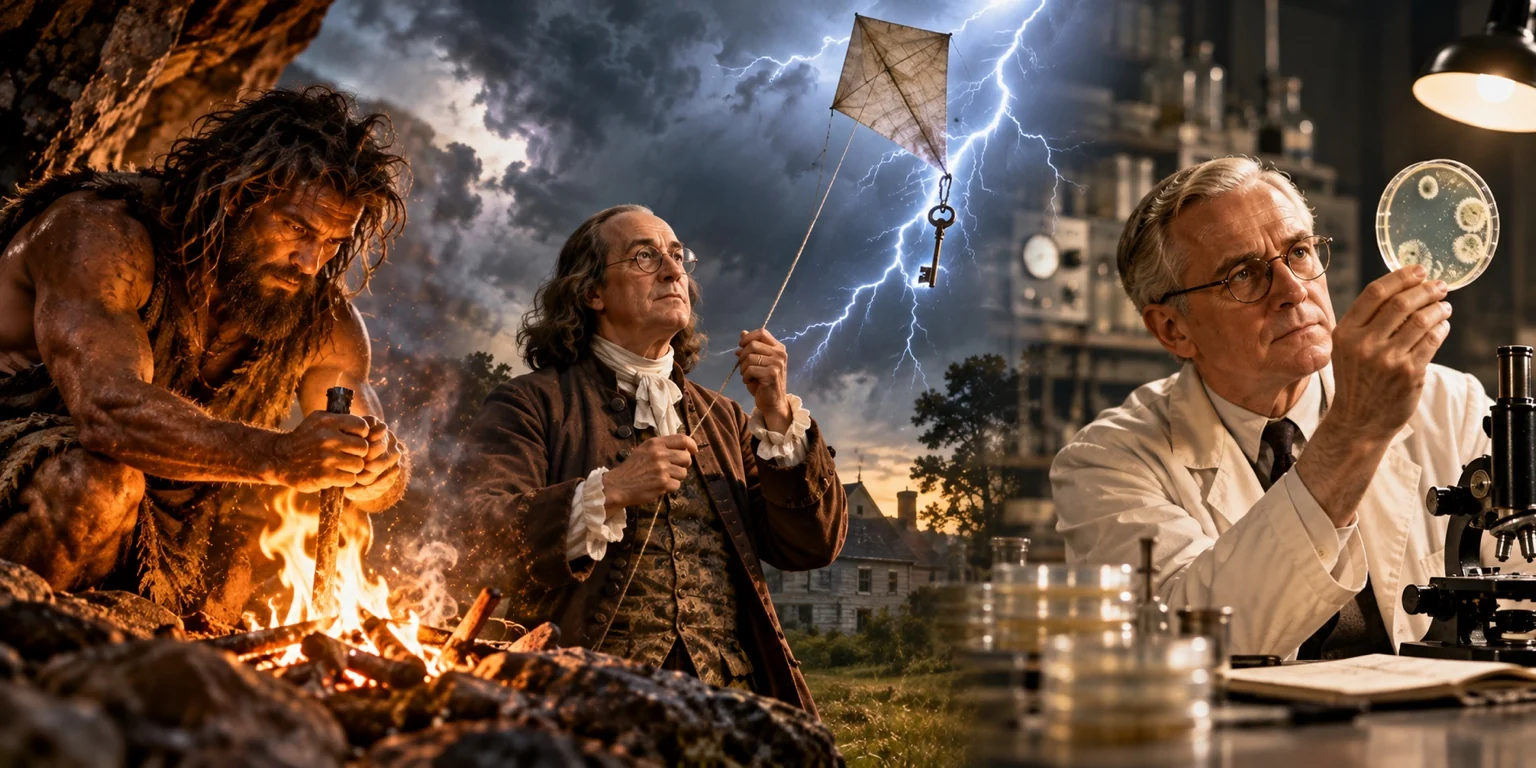
Human history contains discoveries and technologies that changed what came afterward.
Fire.
Electricity.
Penicillin.
Their importance wasn't limited to the first thing people did with them. They contributed to possibilities that unfolded far beyond the original discovery.
I'm not claiming that we already know AI belongs alongside any particular historical breakthrough.
We don't know that yet.
We're living inside this chapter rather than reading it from the future.
And that's exactly what fascinates me.
Because the most remarkable thing about artificial intelligence may not ultimately be the things it can do today.
It may be what it helps human beings discover tomorrow.
AI is already being applied across fields ranging from language and vision to medicine, logistics, scientific research and other areas; researchers are also exploring AI systems as tools for further discovery.
Which means I find myself wondering about something I couldn't have imagined while watching WarGames:
What if some of the most important things AI helps us discover are things we don't even know exist yet?
The Discovery
When I was younger, the boundary between possible and impossible seemed much clearer.
Some things were real.
Some things belonged to science fiction.
Artificial intelligence taught me to be a little more careful about drawing that line.
I've now lived long enough to watch something I once associated with movies become something I interact with in ordinary life.
And that makes me wonder what else I've placed on the wrong side of that boundary.
What will seem impossible today and ordinary someday?
What haven't we invented?
What haven't we discovered?
What questions haven't we even learned to ask?
I don't know.
And strangely enough, that's the part I'm most excited about.
The most exciting thing about AI isn't what it already knows. It's what it may help us discover that we don't know exists yet.
Maybe the future didn't arrive the way I imagined it would.
But it arrived.
And apparently, I named it Brad. 🧭
Join the Discovery
Here’s your next discovery challenge: think of something that once seemed possible only in a movie and is now part of ordinary life.
What changed? When did you first encounter it yourself? Did it make you excited, uncertain, curious—or all three?
Share a memory, a question, or something you’ve created while learning a new technology. You don’t have to understand every detail to begin exploring what it means to you.
Share your discovery →Behind the Discovery
This article began with my memories of watching WarGames and imagining artificial intelligence as something belonging to the future.
My friend Chris introduced me to an AI application, and experimenting with it eventually became part of building Snackable Steel and Discover the Journey. The article itself grew from conversations with Brad, the name I use for my AI assistant, followed by research and editing.
The personal memories are mine. The historical context and the AI-created illustrations help connect those memories to a much larger story.
What did you discover today?
Discover the Journey.